# Southeast Asia Celebrates Eid al-Adha Across Indonesia, Philippines, and Malaysia
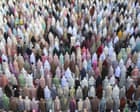
Approximately 2 billion Muslims worldwide marked Eid al-Adha, Islam's second major holiday, with Indonesia, the Philippines, and Malaysia serving as vibrant epicenters of celebration. The Festival of Sacrifice brought worshippers together in mosques, train stations, public squares, and beachfront locations, creating a tapestry of devotion that stretched across Southeast Asia's predominantly Muslim populations.
Indonesia, home to roughly 230 million Muslims and the world's largest Muslim-majority nation, witnessed sprawling gatherings at its major mosques and transportation hubs. The holiday brought significant travel flows as families journeyed across the archipelago's 17,000 islands for festivities. Major cities including Jakarta, Surabaya, and Bandung experienced packed prayer services and street celebrations. Train stations transformed into pilgrimage points, with the island of Java experiencing particularly heavy passenger volumes as Indonesians conducted the traditional homecoming exodus known as mudik.
Malaysia's celebrations reflected the country's constitutional status as an Islamic state, with prayer gatherings filling mosques from Kuala Lumpur to Penang and extending to East Malaysia's Sabah and Sarawak regions. The country's diverse Muslim communities, including Malays, Bruneians, and migrant workers, created multicultural Eid observances across urban centers and rural villages alike. Shopping malls and public squares hosted community events alongside traditional mosque prayers.
The Philippines, with a Muslim population concentrated in Mindanao and the Bangsamoro Autonomous Region, celebrated with particular energy in Cotabato City, Zamboanga, and Marawi. Beach and seaside prayers highlighted the Philippines' unique geography, with some communities gathering at the water's edge for special observances. The holiday provided a rare moment of broad religious tolerance across the predominantly Catholic nation, with local governments supporting public celebrations and many non-Muslims joining in community festivities.
Eid al-Adha commemorates Prophet Ibrahim's willingness to sacrifice his son in obedience to Allah, a cornerstone narrative in Islamic theology. The celebration runs for multiple days and involves ritual animal sacrifices, new clothing, family gatherings, and charitable donations. Streets filled with the aroma of freshly grilled meat, children wore traditional attire, and extended families reunited across these Southeast Asian nations.
For travelers planning visits to Indonesia, the Philippines, or Malaysia during future Eid celebrations, significant logistics apply. Airlines including Garuda Indonesia, Philippine Airlines, and Malaysia Airlines experience surge pricing and full capacity during the two-week period surrounding Eid al-Adha. Hotels and guesthouses in major cities book solid weeks in advance. Public transport becomes congested, particularly in Indonesia's Java region where mudik sees tens of millions traveling simultaneously. Budget accommodations and mid-range chains fill rapidly, forcing travelers to either book far ahead or venture to secondary cities for availability.
The 2026 celebrations demonstrated how Southeast Asia's Muslim majority transforms entire nations during this observance. For international visitors, Eid al-Adha presents opportunities to witness authentic religious practice and cultural tradition firsthand, though careful advance planning proves essential.