# Marrakech's Enduring Magic: Why This Moroccan Desert City Keeps Revealing New Secrets
Marrakech, Morocco's Red City, operates on a different plane than most tourist destinations. Built where the Atlas Mountains meet the Saharan plains, this ancient trading hub transforms with each visit, rewarding repeat travelers with layers of discovery that first-time visitors rarely uncover.
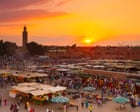
The city's defining feature is its medina, a labyrinthine warren of narrow alleys, covered souks, and hidden riads that disorient and enchant simultaneously. This isn't a place to map efficiently. Rather, travelers surrender to the sensory overload: the call to prayer echoing across terracotta rooftops, merchants hawking leather goods and spices, the aroma of tagine drifting from open-air kitchens, the texture of hand-woven carpets beneath your fingers. The street theatre never stops. Storytellers gather crowds in Jemaa el-Fnaa square. Snake charmers work their ancient trade. Water sellers in red fez caps pose for photographs alongside locals conducting their daily commerce.
What separates Marrakech from other Moroccan cities like Fez or Tangier is its dramatic geography. The snow-capped Atlas Mountains frame the city to the southeast, visible from many vantage points. Adventurous travelers can experience hot air balloon rides over the surrounding desert and mountain ranges at dawn, ascending 800 meters to watch the landscape shift from shadow to warm terracotta as the sun rises. These flights offer perspective on the region's historical role as a crucial stop on trans-Saharan trade routes, when camel caravans transported salt, spices, and goods through these same valleys.
The city rewards slow travel. Beyond the medina's chaos lies another Marrakech: the serene riads, traditional houses built around interior courtyards filled with fountains and date palms. Many have been converted into guesthouses and boutique hotels. The Mamounia, opened in 1923, remains one of North Africa's most storied luxury properties, with its Art Deco architecture and 20-acre gardens. Smaller riads like those found throughout the medina offer more intimate experiences, with proprietors who share local knowledge accumulated over generations.
The Majorelle Garden provides another escape, its jewel-blue buildings and exotic plants creating a peaceful counterpoint to the medina's intensity. Originally designed by French artist Jacques Majorelle in the 1920s, it was later rescued and restored by Yves Saint Laurent, making it one of Morocco's most photographed spaces.
Visit Marrakech once, and you'll enjoy the spectacle. Return, and you'll notice details invisible during initial sensory overload: the astronomical precision of geometric zellige tilework in specific riads, the family hierarchies governing individual souks, the seasonal shifts in what goods traders offer. The city reveals itself gradually, rewarding patience and repeat visits with genuine connection rather than superficial tourism.