# Hiking Norway's Heavily Monitored Russian Border
Norway's northeastern frontier with Russia presents a paradox for adventure travellers. Some of Europe's most dramatic hiking terrain sits directly along one of the continent's most closely watched borders, creating an unusual mix of natural beauty and geopolitical reality that shapes the trekking experience.
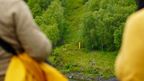
The border region spans roughly 196 kilometres through Finnmark county in northern Norway, with multiple marked hiking trails threading through valleys, forests, and mountainous terrain that straddles the international boundary. Hikers exploring routes in this area encounter constant reminders of Cold War tensions that persist today. Russian military installations dot the opposite side of the border. Norwegian border patrols regularly monitor foot traffic. Surveillance cameras and marked boundary markers punctuate the landscape at regular intervals.
Popular trails in the Pasvik Valley and near Storfjord offer some of Finnmark's most rewarding wilderness experiences. The Storfjord area, accessible from the small town of Honningsvag on North Cape Peninsula, provides panoramic views across tundra landscape toward the Russian frontier. Trails around the Pasvik Nature Reserve showcase pristine boreal forests and glacially carved valleys. Despite their remote location, these paths attract steady foot traffic from hikers seeking something beyond Norway's well-trodden mountain corridors.
The surveillance infrastructure remains subtle but omnipresent. Hikers report seeing camera equipment mounted on poles near official border crossing points. Russian border guard stations visible from Norwegian territory create an atmosphere of geopolitical awareness unusual for recreational hiking. Norwegian authorities maintain strict protocols. Hikers must stay on marked trails. Venturing into unmarked terrain near the border risks confrontation with Norwegian border patrols. Photography near border infrastructure requires caution, as does any attempt to cross the boundary without proper documentation.
This situation intensified following Russia's 2022 invasion of Ukraine. Norway, historically neutral, joined NATO in April 2023. The country dramatically increased military presence along its Russian border. New security measures affected the hiking experience, though marked trails remained open to the public. Border patrols became more visible. Response times to treaty violations shortened noticeably.
For practical travellers, accessing this region requires careful planning. The nearest major airport is in Tromsø, roughly 350 kilometres southwest, served by Norse Atlantic Airways, SAS Scandinavian Airlines, and Lufthansa. From there, rental cars provide essential transport to trailheads, as public transit remains sparse in Finnmark. Summer months from June through August offer optimal conditions, with extended daylight enabling longer trekking days.
Accommodation ranges from basic mountain huts maintained by the Norwegian Trekking Association (Den Norske Turistforeningen) to wilderness cabins and guesthouses in towns like Kirkenes and Vardo. Kirkenes, the largest settlement near the border, sits just 9 kilometres from Russian territory and offers modern hotels alongside museums documenting Cold War history.
The experience offers hikers something genuinely distinctive. Few European borders combine such rugged wilderness with such overt security infrastructure. Trekking here means navigating not just challenging terrain, but also the psychological weight of geopolitical boundary lines that remain fundamentally contested in the broader European security landscape. For those seeking adventure beyond conventional mountain destinations, Norway's Russian frontier delivers both natural splendour and contemporary historical context in equal measure.