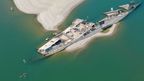
# Nazi Shipwrecks Surface as Danube Hits Historic Low Water Levels
An unprecedented drought across Europe has turned the Danube River into an open-air museum of World War II history. Record water levels have exposed dozens of Nazi military vessels, including barges, tugboats, and cargo ships, that sank during the final months of the war and have remained underwater for nearly 80 years.
The Danube, Europe's second-longest river, stretches 1,771 miles from Germany's Black Forest through ten countries before emptying into the Black Sea. This summer's extreme drought revealed submerged wrecks from the riverbed in Austria, Hungary, and Serbia. Some vessels are now partially visible above the waterline, their corroded hulls and turrets accessible to curious travelers and historians touring the region.
The exposed wrecks tell the story of Nazi Germany's desperate final retreat. During 1944 and 1945, as Allied forces pushed eastward, the Wehrmacht scuttled hundreds of vessels to prevent them from falling into enemy hands. Others were destroyed during bombing campaigns or combat operations. The combination of wartime destruction and decades of riverbed sediment created a graveyard of military hardware that remained hidden from view until this year's water crisis.
For travelers visiting the Danube, this natural phenomenon offers an unexpected window into the region's complex history. River cruises operating between Passau, Germany, and Budapest, Hungary, now incorporate detours to these newly exposed sites. Major operators including Uniworld, Viking River Cruises, and Avalon Waterways have adjusted itineraries to allow passengers to view the wrecks from their vessels or during shore excursions. Some passengers have hired local guides in Vienna, Budapest, and Bratislava to explore the sites on foot during low-water periods.
The exposure carries risks alongside historical value. Rusted ordnance and volatile materials remain embedded in some wrecks. Austrian and Hungarian authorities have cordoned off the most dangerous sites and issued warnings against unauthorized salvage or boarding. The Romanian government has conducted similar assessments along its Danube sections.
Tourism patterns are already shifting. Hotels in riverside towns like Regensburg, Germany, and Esztergom, Hungary, report increased bookings from history enthusiasts and photographers seeking to document the wrecks. Daily river cruise fares have risen 15-20 percent during peak viewing periods, according to travel operators.
Environmental scientists warn that returning water levels will eventually submerge the wrecks again. Experts estimate that normal Danube water patterns will resume within 12-18 months, depending on autumn and winter precipitation. This temporary accessibility has prompted museums and historical societies across Central Europe to accelerate documentation efforts and organize guided tours before the shipwrecks disappear from view once more.
For travelers planning a Danube cruise or a Central European river expedition, this represents a rare historical opportunity. Tours should be booked soon through established cruise operators or local tourism boards in Austria, Hungary, and Serbia to ensure safe access before water levels normalize.