# Retro-Futurism on the French Riviera: La Grande-Motte Emerges as Europe's Premier Architourism Destination
La Grande-Motte, a planned seaside resort 20 kilometers southwest of Montpellier in southern France, has become the unexpected centerpiece of Europe's growing architourism movement. Built during the 1960s and 1970s, this purpose-built vacation town showcases some of the continent's most audacious modernist architecture, drawing travelers who prioritize bold design over traditional beach culture.
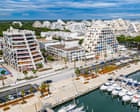
The resort originated from a practical problem. French planners created La Grande-Motte to retain domestic tourism during an era when sun-seeking Parisians were increasingly choosing Spanish coastal destinations instead. The solution involved hiring visionary architects who embraced futuristic thinking and sculptural ambition. The result transformed a flat stretch of Mediterranean coastline into something genuinely otherworldly. Residential complexes feature Mayan pyramid-inspired apartments with sweeping, intergalactic curves that seem pulled from 1970s science fiction. Curved balconies, dramatic angular facades, and buildings that resemble nothing in traditional architecture dominate the skyline.
The town itself functions as a time capsule from an era when architects believed in the transformative power of urban design and optimistic modernism. Wide boulevards, carefully planned commercial zones, and residential towers create an immersive environment where every structure tells a story about postwar European ambition.
La Grande-Motte joins a select roster of architourism destinations gaining traction among design-conscious travelers. Oscar Niemeyer's Brasília in Brazil and Le Corbusier's Chandigarh in India established the template for this niche travel category. Brasília, built between 1956 and 1960 as Brazil's purpose-built capital, attracts 2 million visitors annually seeking its monumental, visionary architecture. Chandigarh draws architecture students and modernism enthusiasts from worldwide. These destinations share common DNA with La Grande-Motte: they represent moments when designers rejected historical precedent entirely and built from scratch according to utopian planning principles.
What differentiates La Grande-Motte is accessibility. Unlike Brasília or Chandigarh, visitors can reach it easily from Montpellier via regional trains or rental cars. The town offers functional beach resort infrastructure alongside its architectural attractions. Visitors find genuine hotels, seafood restaurants, and sandy beaches alongside the postwar monuments. A stay becomes both leisure vacation and design pilgrimage.
Accommodation options range from period apartments within the original residential complexes to modern hotels. Many architects preserve the retro interior aesthetic, complete with original furnishings and design details. This creates an immersive experience where guests live within the vision rather than merely observing it from outside.
The architourism boom reflects broader travel trends. Younger travelers increasingly seek meaningful experiences over passive sightseeing. Design pilgrimage offers intellectual engagement. Instagram accessibility helps amplify interest. The stark geometry and sculptural forms of La Grande-Motte photograph exceptionally well, creating organic social media promotion.
La Grande-Motte's moment arrives as international tourism recovers. European beach destinations face increasing pressure from overtourism and climate concerns. Architourism offers a differentiated positioning. Travelers discover a destination that blends leisure with cultural substance, history with forward-thinking design. The town that was built to keep tourists from leaving France now attracts visitors specifically because of what architects accomplished there fifty years ago.