# Tuscany's Island Escape: Five Mediterranean Gems Beyond the Crowds
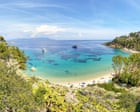
Tuscany draws millions of visitors annually to Florence's Uffizi Gallery and Siena's medieval piazza, but the region's true escape lies offshore. The Tuscan archipelago, seven islands scattered between the Tuscan mainland and Corsica, offers travelers a chance to shed the tourist masses while staying within Italy's protected national park system.
Each island delivers distinct experiences. Elba, the largest and most developed, pulses with activity and infrastructure that makes it accessible for families and leisure travelers seeking beaches without complete isolation. The smaller islands range from moderately populated retreats to car-free destinations where only foot traffic moves visitors through villages and coastal paths.
Giannutri represents the archipelago's extreme: a tiny, vehicle-free island where visitors arrive by ferry and navigate narrow lanes on foot or bicycle. This forced simplicity attracts travelers seeking genuine disconnection from modern logistics. No cars means no engine noise, no road infrastructure, and landscapes that prioritize ecology over commerce.
Two islands, Montecristo and Gorgona, remain largely inaccessible. Montecristo permits only strictly limited guided tours, protecting its pristine ecosystem and historical significance as the setting for Alexandre Dumas' adventure novel. Gorgona operates similarly, with access restricted to preserve its natural state. These limitations actually enhance their appeal for travelers fascinated by exclusivity and untouched Mediterranean wilderness.
The remaining islands in this five-island focus occupy the middle ground. They offer genuine tourism infrastructure while maintaining authentic character. Ferry schedules from the Tuscan coast run regularly, typically departing from Porto Santo Stefano or Piombino. Travel times range from 30 minutes to two hours depending on destination.
Accommodation varies by island. Elba hosts resort hotels, guesthouses, and rental apartments with pricing comparable to mainland Tuscany. Smaller islands offer more limited options, typically family-run guesthouses or agriturismos that require advance booking, especially during July and August peak season.
The islands attract travelers seeking alternatives to Florence's packed museums and Siena's crowded medieval streets. Rather than joining queues at the Duomo or battling crowds in the Campo, visitors escape to islands where the pace shifts toward hiking, swimming, and slow meals at waterfront restaurants. Typical day trips from the coast cost 15 to 25 euros per person for ferry passage, with many travelers staying three to five days to justify the journey.
Visiting during shoulder seasons (May-June or September-October) maximizes the archipelago's appeal. Summer brings heat and crowds even to remote islands, while winter ferries run sporadically. Spring offers warm water, blooming Mediterranean flora, and manageable visitor numbers.
The archipelago works best as a regional add-on to a broader Tuscany itinerary. Travelers based in Florence or Siena can reach the coast by car or train within three hours, catch a ferry, and experience island life without abandoning Tuscan wine country entirely. This flexibility explains why the islands appeal less as standalone destinations and more as escape valves for mainland visitors seeking punctuation marks in their itineraries.