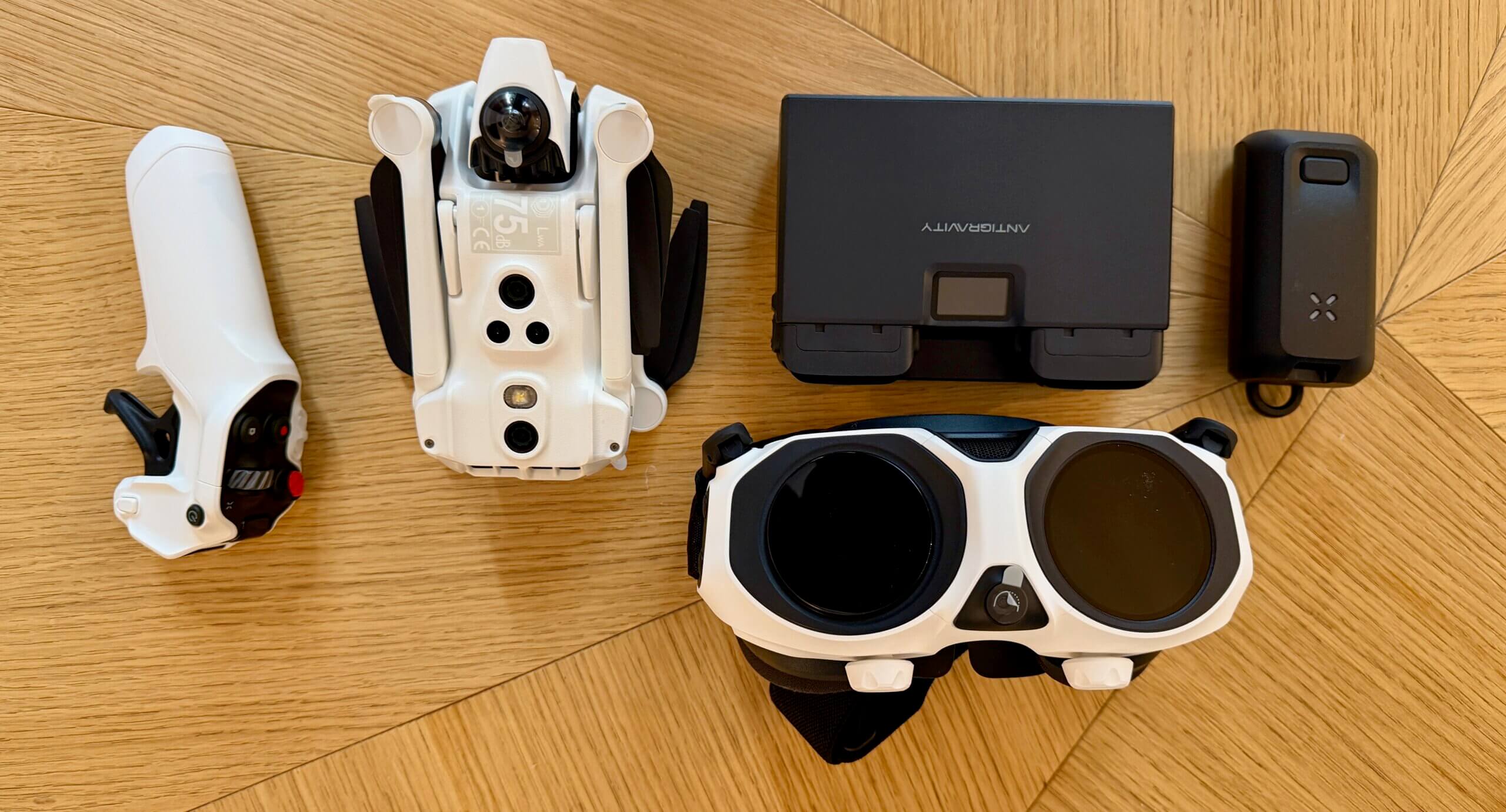
# The Antigravity A1 Drone Enters the Traveler's Toolkit
Drone technology has become standard travel gear for content creators and adventure seekers. The newly released Antigravity A1, launched in late 2025, arrives as travel photographers seek better alternatives to bulkier established models. This compact drone promises to deliver cinematic aerial footage without the regulatory headaches that plague larger systems.
Travelers packing drones face real constraints. Most destinations enforce strict no-fly zones around airports, national parks, and populated areas. Smaller drones often slip through these restrictions more easily, and the Antigravity A1 appears designed with portability as a core feature. The engineering focuses on eliminating traditional gimbal limitations while maintaining the stabilized footage that transforms ordinary travel videos into broadcast-quality content.
Why this matters now. Road trips and adventure travel have evolved beyond snapshot documentation. Instagram and TikTok reward dynamic aerial perspectives. A traveler visiting Iceland, the Swiss Alps, or Costa Rica's cloud forests expects to capture sweeping landscape shots. Traditional point-and-shoot cameras and even smartphone gimbals cannot replicate the visual storytelling that aerial footage provides. The Antigravity A1 enters a market where demand for portable aerial tools outpaces supply.
The drone landscape includes established players like DJI, which dominates with models ranging from the budget-friendly Mini series to professional Mavic and Air lines. Auterion, Parrot, and Skydio offer alternatives for specific use cases. The Antigravity A1 positions itself as a middle-ground option, targeting travelers who need reliability without DJI's price tag or regulatory complexity in certain regions.
Battery life remains the critical variable for travel drones. Most models deliver 20-30 minutes of flight time per charge. Travelers heading into remote areas must pack multiple batteries and consider charging infrastructure. The Antigravity A1's approach to power management will determine its viability for extended expeditions in places like Patagonia or the Himalayas, where electrical outlets become rare.
Regulatory concerns shape how travelers deploy drones. The FAA requires registration for drones over 0.55 pounds in the United States. Many countries demand permits for commercial filming. Thailand, for instance, restricts drone use near temples and government buildings. Spain requires authorization even for recreational flying. The European Union established unified drone rules in 2022, creating a fragmented patchwork of requirements. Travelers must research destination-specific rules before departure. A lighter, less conspicuous drone may attract less official attention, but operators remain legally responsible for compliance.
The travel photography market itself has shifted. YouTube creators and Instagram influencers now monetize travel content through sponsorships and advertising. This economic incentive drives demand for professional-grade equipment that remains portable. Hotels and tourism boards increasingly market destinations based on their "Instagram-ability." Aerial footage differentiates travel content in a saturated market.
Storage and connectivity also factor into travel drone adoption. Raw 4K footage consumes significant device storage. Cloud backup solutions remain unreliable in remote regions with poor internet. Travelers must balance capturing content with managing file sizes and battery constraints across weeks-long journeys.
The Antigravity A1 enters a market where portability, regulatory compliance, and content quality converge. Success depends on execution across all three fronts. For travelers planning expeditions to visually dramatic destinations, the timing of this release aligns with growing demand for lightweight aerial capture tools that simplify rather than complicate international travel workflows.