# Beyond the Tourist Trail: Huế Reveals Vietnam's Hidden Layers
Most travelers rush through Vietnam following the well-worn path between Hanoi and Ho Chi Minh City, missing entirely the layered history waiting in Huế. This former imperial capital sits roughly halfway between those two megacities and served as the seat of the Nguyễn Dynasty, Vietnam's last royal line. The difference between Huế and the standard tourist circuit? History here feels tangible, not packaged.
Huế stands apart because its attractions resist easy categorization. Unlike the commercialized attractions found in Hanoi's Old Quarter or Ho Chi Minh City's Ben Thanh Market, Huế offers genuine archaeological mystery. Jungle-covered ruins dominate the landscape around the city center. These aren't reconstructed heritage sites designed for Instagram. Many remain partially reclaimed by nature, their stone walls disappearing into dense vegetation and creeping vines. Walking through them requires genuine exploration rather than following roped-off paths.
The Citadel represents the city's most impressive ruin complex. This walled imperial city once housed the royal court and remains partially intact despite heavy bombardment during the Vietnam War. Thick defensive walls still stand. Palaces crumble gracefully. The Forbidden Purple City within the Citadel showcases what remains of royal residences and administrative buildings, their intricate carvings visible beneath decades of overgrowth.
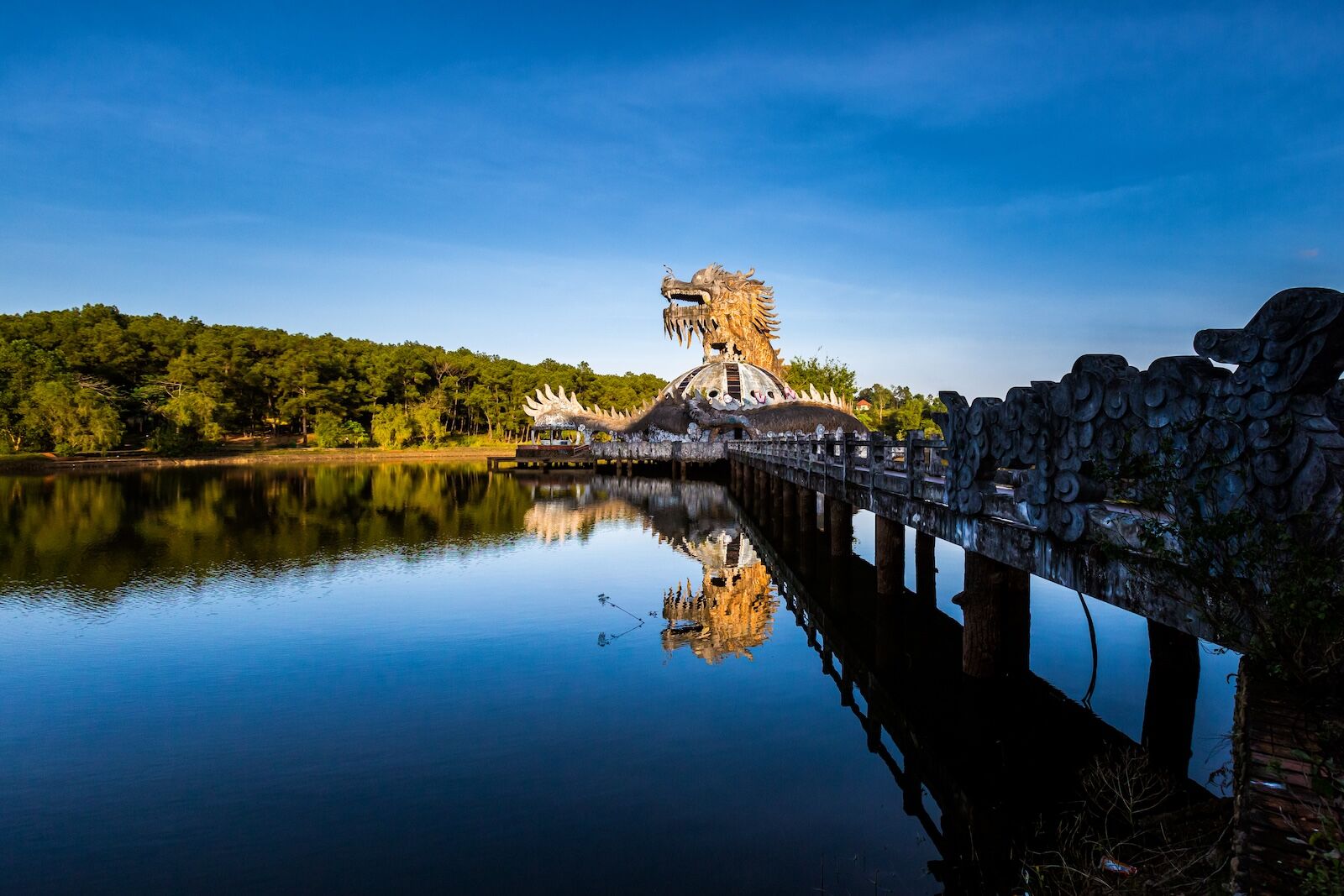
Beyond traditional temples and citadels, Huế presents unexpected historical contradictions. An abandoned water park serves as an eerie counterpoint to the ancient imperial structures. These deteriorating leisure facilities represent Vietnam's post-war evolution and modern aspirations, frozen in time and overtaken by nature. Such contrasts reveal how quickly fortunes shift in Vietnam, from imperial grandeur to modern abandonment.
The city's geographic position makes it accessible yet remote. Flights from Hanoi to Huế airport take roughly two hours on budget carriers like Vietjet Air or Vietnam Airlines. Ho Chi Minh City connections run similar durations. Overland travel via train or bus takes eight to twelve hours from either terminus, though the slower pace allows landscape appreciation. Budget accommodations range from $15 to $30 nightly for decent mid-range hotels. Homestays and guesthouses offer even cheaper options, typically $10 to $20 per night.
Travel patterns in Vietnam continue shifting toward secondary cities as tourists seek authenticity beyond the overcrowded Golden Triangle. Huế benefits from this trend. Unlike Hanoi's packed streets or Ho Chi Minh City's relentless development, Huế maintains relative quietness. Entrance fees to major sites run $5 to $8, substantially cheaper than comparable attractions in Thailand or Cambodia.
The best time for visiting extends from September through April, when humidity drops and rainfall decreases. Monsoon season brings flooding risks and makes jungle exploration hazardous during May through August.
Huế appeals to travelers seeking deeper historical engagement and willing to venture beyond established tourist infrastructure. The combination of imperial archaeology and post-communist decay tells Vietnam's story more honestly than polished resort towns ever could. For those skipping this former capital, Vietnam remains only half-explored.