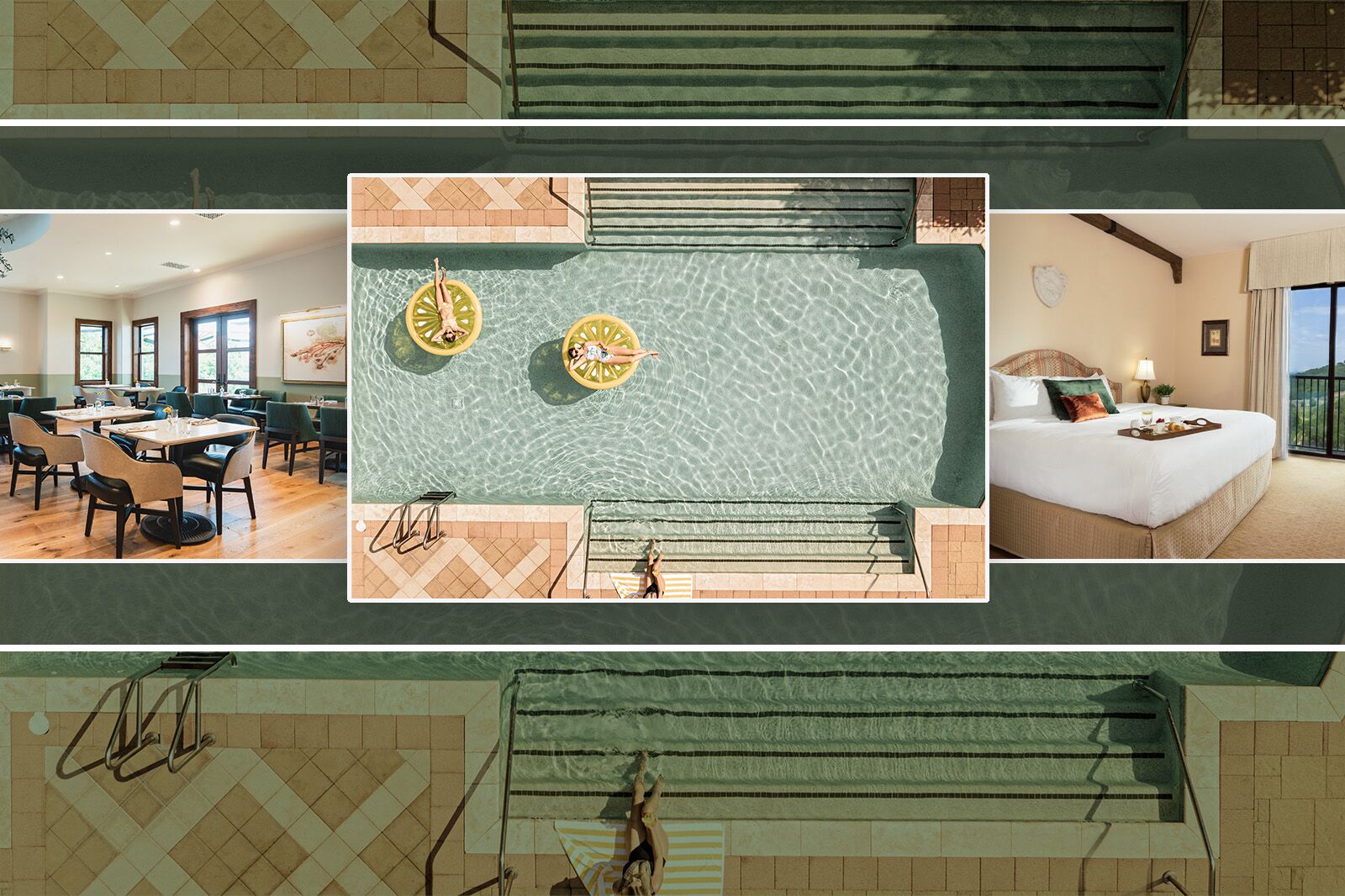
# Italian Romance Blooms in the Texas Hill Country
A new villa-style hotel just outside Austin transports guests straight to Tuscany without the transatlantic flight. Hotel Viata, nestled in the rolling limestone hills northwest of the Texas capital, captures the essence of Italian countryside hospitality while serving as a genuine escape for travelers seeking European charm within driving distance of central Texas.
The property draws inspiration directly from Tuscan architecture and design philosophy. Guests encounter terracotta tones, arched doorways, and Mediterranean landscaping that creates an unmistakable sense of place. The hotel sits in the Texas Hill Country, a region already known for its wine production, rolling landscapes, and weekend getaway appeal. Hotel Viata amplifies that aesthetic by layering authentic Italian villa elements throughout its grounds and accommodations.
This development reflects a broader travel trend toward experiential escapes that blur the line between domestic and international travel. Affluent leisure travelers increasingly seek immersive environments that deliver cultural experiences without passport requirements or jet lag. The "staycation-plus" concept transforms local getaways into destination-worthy experiences. Austin, ranked consistently as one of America's most visited cities, attracts travelers seeking both urban energy and nearby rural retreats. Hotel Viata positions itself between these two worlds, roughly 30 minutes from downtown Austin's live music venues and restaurants, yet far enough removed to feel genuinely remote.
The Hill Country itself has evolved into a serious hospitality corridor. Fredericksburg, Dripping Springs, and other nearby towns host boutique hotels, luxury resorts, and wellness retreats. Hotel Viata joins a competitive landscape where differentiation depends on authentic storytelling and design integrity. The villa approach offers something distinct from the typical limestone-and-cedar architectural vocabulary that dominates regional properties.
Pricing for villa-style hotels in this region typically ranges from $250 to $600 nightly, depending on room configuration and seasonality. Austin's peak tourism seasons stretch from March through May and September through November, when weather proves ideal and hotel rates climb accordingly. Summer heat and winter holiday periods present alternative windows for booking.
The property likely appeals to several traveler profiles. Couples seeking romantic weekend escapes represent the core market, particularly those planning proposals or anniversary celebrations. Small groups and corporate retreats find appeal in the villa concept's intimate scale compared to sprawling resort chains. Wine enthusiasts gravitate toward the Hill Country specifically, given proximity to established vineyards like Becker Vineyards and Treaty Oak Distillery.
Hotel Viata's emergence also signals confidence in Austin's continued growth as a luxury travel destination. Post-pandemic hospitality investment has concentrated in established markets with strong demand fundamentals. Austin checks multiple boxes: population growth, corporate relocation activity, international airline connectivity through Austin-Bergstrom International Airport, and deep cultural attractions.
Access remains straightforward. Drivers from Dallas cover roughly two hours on Interstate 35. Houston travelers face a similar drive time via Interstate 10 and Highway 290. Austin airport offers direct flights from most major US cities, with frequent service from Dallas-Fort Worth and Houston hubs. Once on the ground, the Hill Country's back roads and small-town charm unfold within the surrounding landscape.
For travelers exhausted by chain hotels and long-haul international flights, Hotel Viata delivers tangible value. The property solves a real problem for the Austin tourism market: how to experience European villa culture without the expense and time commitment of a transatlantic journey. Whether the formula succeeds depends on execution across service, dining, and amenities, but the concept taps directly into measurable demand.