# Travellers Discover Europe's Hidden City Breaks, Bypassing the Tourist Crush
Overcrowded tourist capitals across Europe push increasingly savvy travellers to seek alternatives that deliver authentic experiences without the queues, selfie sticks, and inflated prices. A collection of reader submissions reveals a shift toward smaller European cities that offer the charm of famous destinations at a human scale.
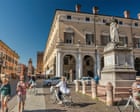
Ferrara in Emilia-Romagna tops the list as a prime example. Located in northern Italy's Veneto region, this walled city delivers exactly what exhausted Venice visitors crave: Renaissance architecture, cycling culture, and genuine Italian life stripped of the carnival atmosphere. The medieval center revolves around the quiet cobbled streets near Via delle Volte, where family-run hotels replace chain operations. Early mornings reward visitors with empty piazzas and cappuccinos consumed by locals rather than tour groups. The city's castle, the Castello Estense, rivals Venetian landmarks in beauty while drawing a fraction of the crowds.
The trend reflects broader travel pattern shifts. Venice welcomes 30 million annual visitors to a lagoon city designed for 260,000 residents. Barcelona's Gothic Quarter struggles under 9 million visitors yearly. Rome's Colosseum sees 7.5 million annual visitors queuing for hours. Travellers increasingly recognize that peak-season visits to A-list European destinations guarantee compromised experiences and premium pricing.
Ferrara exemplifies the counter-trend perfectly. As one reader noted, it "feels like Italy with the volume turned down." Hotels cost 40-60 percent less than Venice properties. Restaurant meals feature regional Emilian specialties like tortellini di zucca and pumpkin risotto at genuine local prices. The Cathedral of St. George and medieval Este palaces command attention without requiring 7am arrivals to beat crowds.
The list extends beyond Italy. Norwegian art nouveau gems also feature prominently among reader favorites. Alesund, a coastal town rebuilt after an 1904 fire, showcases 663 registered art nouveau buildings concentrated within a walkable three-by-three block area. While Bergen attracts cruise ship hordes at its wharf, Alesund offers comparable Scandinavian authenticity with dramatically fewer visitors and stronger value for accommodation and dining.
Mediterranean island cities also appear repeatedly. Smaller Adriatic options like Rovinj in Croatia or Korcula in the Dalmatian region provide the blue-water scenery and limestone architecture that draw millions to Greece and southern Spain, but with functioning infrastructure and accessible restaurant reservations.
This travel philosophy addresses several converging pressures. Overtourism damages host communities while eroding visitor satisfaction. Venice now charges day-tripper entrance fees up to 50 euros. Barcelona residents stage anti-tourism protests. Airbnb restrictions reshape accommodation markets across Europe. Meanwhile, second-tier cities actively welcome visitors and maintain the infrastructure to serve them comfortably.
Budget travellers particularly benefit. A week in Ferrara costs roughly 35-50 percent less than equivalent time in Venice, before accounting for admission fees Venice charges at every historic site. Train connections via Milan take under two hours. Direct flights from London to Bologna airport cost substantially less than Venice services.
The pattern suggests a maturing travel market. Digital nomads, sabbatical takers, and multigenerational families increasingly avoid tourist theater entirely. They research local restaurants on Italian cooking websites, follow regional architecture hashtags, and book apartments rather than hotels. They spend a month in Ferrara instead of three days in Venice.
For planners considering 2025 bookings, the message resonates clearly. European travel satisfaction tracks inversely with destination fame. The cities drawing five million annual visitors deliver commodified experiences at premium prices. The cities drawing 500,000 visitors offer authentic engagement at accessible costs. Ferrara, Alesund, Rovinj, and their peers represent where European travel actually happens now.