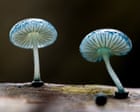
# Deep in Tasmania's Ancient Rainforest, Fungi Hold the Secrets to Wilderness
Tasmania's Takayna/Tarkine rainforest draws adventurers seeking Gondwanan landscapes and mythical thylacines. Now, a new travel experience reveals that the forest's most compelling inhabitants are not the elusive marsupials or metre-long freshwater crayfish, but rather the fungi that predate them by hundreds of millions of years.
Alexis Buxton-Collins recently completed a three-day mycology workshop in Australia's largest cool temperate rainforest, offering a model for specialist natural history tourism that taps into growing traveler interest in biodiversity and deep ecological learning. The experience flips conventional rainforest tourism on its head. Rather than scanning the canopy for wildlife, participants descend into the forest floor to unlock the fungal networks that sustain the entire ecosystem.
Takayna/Tarkine spans 287,000 hectares across north-west Tasmania. The region earned its reputation as one of Australia's last true wilderness areas through genuine isolation and protection. Huon pines growing here reach 2,000 years old, their roots interwoven with fungal partners that convert nutrients and water into forms the trees can absorb. The rainforest's Gondwanan heritage stretches back 65 million years, when Antarctica, Australia, and South America formed a single landmass. Walking through Tarkine means walking through geological time.
The mycology tour taps into accelerating travel trends. Experiential tourism focused on learning from specialists now commands premium pricing, particularly among travelers aged 35-65 with disposable income. Educational tourism operators have expanded offerings across destinations worldwide. The UK's Society of Mushroom Experts offers foraging courses in English woodlands. New Zealand's Fungi Foundation runs immersive workshops across the South Island. Costa Rica's Osa Peninsula has launched guided fungal biodiversity tours through rainforest lodges.
What makes the Tarkine experience distinct is its focus on fungi as protagonists rather than curiosities. Fungi represent the third kingdom of life, neither plant nor animal. They create the architecture of forest ecosystems. Mycelial networks connect trees underground, facilitating nutrient exchange and communication. Decomposition driven by fungi recycles dead matter into living systems. Without fungi, temperate rainforests collapse.
Tasmania's cool temperate conditions produce exceptional fungal diversity. Winter and spring rains trigger fruiting bodies across the forest floor. Participants in mycology workshops typically spend 8-10 hours daily in the field, learning species identification, ecological roles, and sustainable harvesting practices. The tours operate year-round, though autumn and spring offer peak fungal displays. Cost structures typically run between AUD 800-1,200 for three-day programs, including accommodation at nearby lodges in Launceston or the smaller towns of Corinna and Marrawah.
The Tarkine offers accommodation options ranging from basic eco-lodges to luxury wilderness retreats. The Tarkine Wilderness Lodge provides mid-range comfort with guided activities included. Private operators coordinate transfers from Launceston, 90 kilometers south, where major Australian airlines including Qantas and Virgin Australia operate daily services from Melbourne and Sydney.
This shift toward fungal tourism signals broader changes in nature-based travel. As climate concerns mount and travelers seek deeper connections to place, tours focused on invisible ecosystems and foundational species gain traction. The Tarkine's ancient rainforest becomes not just a destination for spotting animals, but a classroom for understanding how life itself functions beyond human perception.