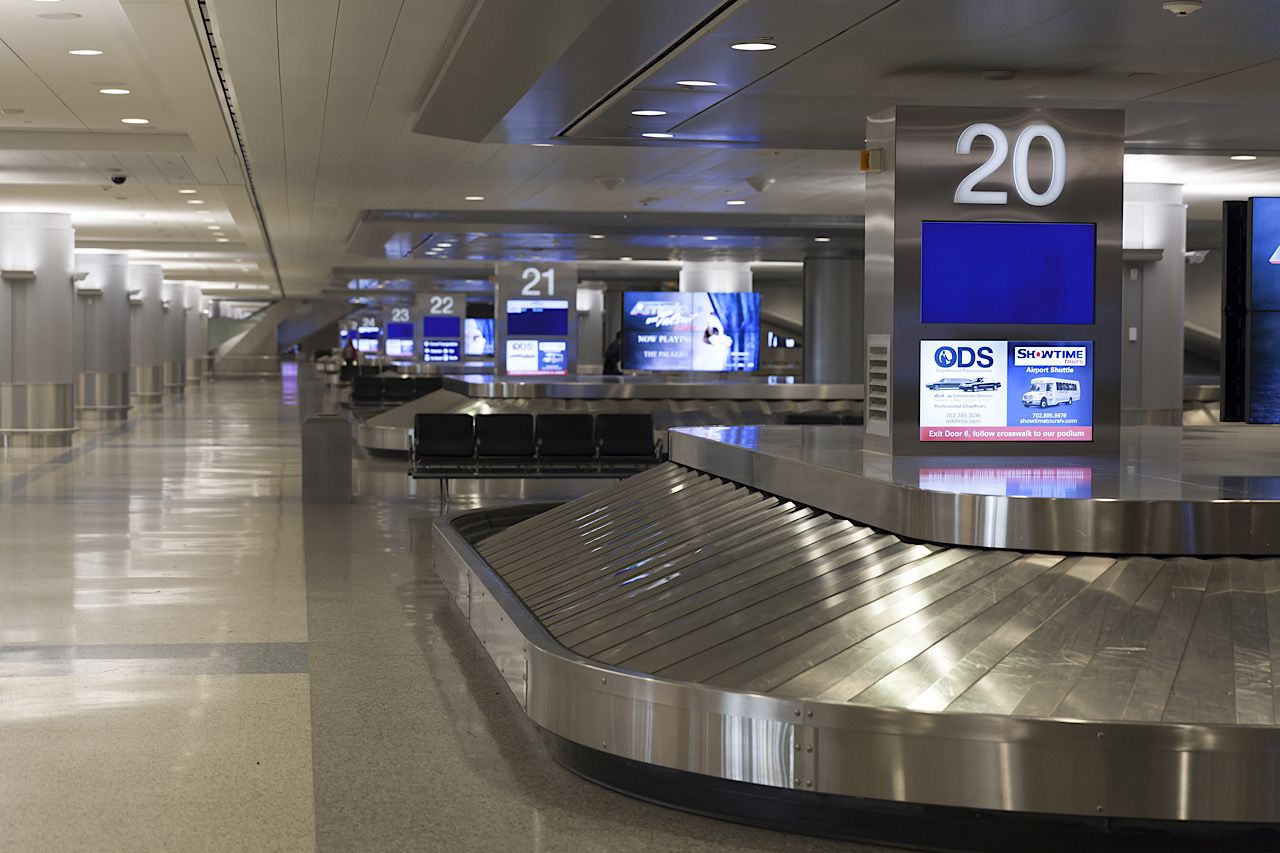
# Why Airports Put Baggage Claim at the Farthest End
You arrive at your gate after a three-hour flight. Exhausted, you follow the signs deeper into the terminal, past shops and restaurants, wandering for what feels like forever before reaching baggage claim. This frustration is not accidental. Airport designers employ a deliberate strategy when placing baggage claim carousels at the terminal's far reaches.
The walk to baggage claim serves a psychological purpose. Airport planners use distance to manipulate time perception. When passengers walk extended routes to retrieve luggage, the journey itself occupies their mind, making the wait feel shorter than it actually is. This principle, called "time distortion," works because active movement engages cognitive resources differently than standing still. A five-minute walk to baggage claim followed by a ten-minute wait feels faster than a fifteen-minute stationary wait at a nearby carousel.
This design choice also benefits airport commerce. The longer route to baggage claim forces passengers past duty-free shops, restaurants, cafes, and retail outlets. Weary travelers encounter impulse-buying opportunities at every turn. A traveler heading to baggage claim passes through zones designed to encourage spending. Airlines and airport authorities profit from this foot traffic, even as passengers perceive they are simply walking to collect their bags.
Security and operational efficiency provide additional reasons. Baggage carousels require significant space, specialized machinery, and dedicated sorting infrastructure. Placing them away from gate areas frees premium terminal real estate for higher-revenue activities like premium restaurants and luxury retail. Major hub airports like London Heathrow, Los Angeles International, and Dubai International separate baggage claim from boarding gates by design, not accident.
The strategy also manages crowd flow. When baggage claim sits adjacent to gates, congestion intensifies immediately after arrivals. By distributing passengers across the terminal via longer walking routes, airports reduce density in gate areas. This spreads demand for restrooms, water fountains, and customer service desks.
Some airports push this concept further. Frankfurt Airport and Singapore Changi Airport employ moving walkways and trains connecting terminals to baggage areas, creating entertainment value during transit. These systems serve the dual purpose of moving people efficiently while keeping them engaged and occupied.
For travelers, understanding this strategy offers practical benefits. Pack carry-on bags when possible to bypass baggage claim entirely. At major hubs, research terminal maps before arrival to anticipate walking distances. Download airport apps like those provided by Heathrow or LAX to navigate efficiently. Wear comfortable shoes. Budget extra time between connecting flights, accounting for the actual distance between gates and baggage claim.
The next time baggage claim appears impossibly far away, remember that your long walk serves airport economics as much as operational necessity. The design works because it balances passenger psychology, retail opportunity, and logistics. Airports have perfected the art of making distance feel purposeful.