# Three Countries, One Hike: The Alpe Adria Loop Rewrites Alpine Adventure
Hikers crossing the Feistritzer Alm, a peaceful sweep of Alpine pasture where Austria meets Italy, routinely ignore the Prussian-font signpost declaring "Achtung! Staatsgrenze" (State Border). Cows graze across invisible lines. Mountain bikers prop their cycles against border markers. Patrons at Schutzhütte Oisternig sip cold beers without concern for which country they occupy. This is the spirit of the Alpe Adria loop, an eight-day walking trail that proves borders matter far less than the landscape itself.
The Alpe Adria loop connects three Alpine nations in a single seamless hike. Hikers traverse Austria, Slovenia, and Italy through dramatic peaks, glorious meadows, and charming mountain huts that define Central European hiking culture. This route represents a growing trend in European walking tourism. Multi-country trails dissolve the friction of border crossings, allowing trekkers to experience interconnected landscapes and cultures without the bureaucratic weight that once defined Alpine travel.
The trail's beauty lies in its accessibility. Eight days suits intermediate hikers unwilling to commit to two-week expeditions. Unlike haute routes requiring technical climbing skills or glacier experience, the Alpe Adria loop follows established trails maintained by Austrian, Slovenian, and Italian alpine clubs. Accommodation options range from rustic refugios to family-run guesthouses, making the trek manageable for various budgets and comfort preferences.
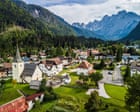
The route showcases dramatic contrasts. Austrian sections deliver crisp meadows and craggy peaks, their names reflecting centuries of Austro-Hungarian geography. The transition into Slovenia introduces softer ridgelines and denser forests, where trails descend into charming valleys around towns like Kranjska Gora. Italian sections, particularly around the Julian Alps, offer Mediterranean warmth creeping into Alpine scenery. This diversity prevents hiker monotony and provides natural rhythm to the journey.
Practical logistics matter for border-hopping hikes. EU citizens cross freely with only national ID cards. Non-EU travelers should verify Schengen regulations before departure. Late spring through September offers optimal conditions. Snow lingers above 2,000 meters into June, while autumn weather deteriorates rapidly after September. Peak season runs July through August, meaning crowded huts and trail congestion. June and September provide superior solitude and clearer views.
Costs remain reasonable for Alpine hiking. Mountain hut stays average 25 to 40 euros per night. Local restaurants serve hearty schnitzel, spaetzle, and goulash for 10 to 15 euros. Hiring guides through local operators like Alpinschule Ghedina in Cortina d'Ampezzo or Austrian alpine clubs runs 80 to 120 euros daily. Package deals combining accommodation and guided sections cost roughly 1,200 to 1,800 euros total.
What distinguishes the Alpe Adria loop from crowded Swiss alternatives like the Tour of Mont Blanc is precisely its triple-country character. Hikers experience three distinct Alpine cultures, cuisines, and architectural traditions without flying or transferring between separate treks. The trail demands no technical gear beyond proper hiking boots and weather protection. It demands only willingness to ignore signposts and trust that borders matter far less than the mountains themselves.