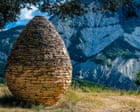
# Hiking Through Art: Andy Goldsworthy's Refuge Trail Transforms Haute-Provence into an Open-Air Gallery
The Refuges d'Art trail in Haute-Provence offers hikers something rare: a long-distance walking route that fuses wilderness trekking with contemporary sculpture. The 90-kilometre path, designed by celebrated land artist Andy Goldsworthy, strings together seven artist-built shelters across the mountainous French countryside, creating a hybrid experience that sits between hiking expedition and art installation.
Goldsworthy's intervention transforms what could be an ordinary multi-day trek into an immersive encounter with nature-integrated art. The refuges themselves serve as both functional overnight shelters and sculptural works. Built from local stone, wood, and earth, each structure responds to its landscape rather than imposing upon it. Hikers don't simply pass through scenery; they sleep within it, waking inside art.
The trail operates in Haute-Provence, the dramatic terrain that straddles the Alpes-de-Haute-Provence and Var departments. This region, known for lavender fields giving way to alpine peaks, provides the geological and visual foundation for Goldsworthy's vision. The route demands serious hiking credentials. Multi-day backpacking at elevation requires fitness, navigation skills, and proper equipment. The trail attracts experienced walkers, though the artist's reputation draws curious novices willing to challenge themselves.
The concept inverts typical art tourism. Rather than visiting galleries or outdoor sculpture parks, visitors earn their viewing through physical exertion. The 90-kilometre distance unfolds over roughly five to seven days, depending on fitness and weather conditions. Nights spent in the refuges create intimate moments. A hiker might rest inside a stone shelter, rain pattering on local slate, surrounded by Goldsworthy's intentional compositions of rock and natural material. These moments transform abstract appreciation into embodied experience.
Logistically, the Refuges d'Art operates as a supported hiking experience. The refuges provide shelter but not hotels; hikers bring sleeping bags and camping mats. Water sources exist along the route, though carrying capacity matters. The trail functions year-round, though summer months (June through September) offer the most reliable weather and accessibility. Spring and autumn provide smaller crowds and stunning light conditions across the limestone and schist formations.
Access to the trailhead involves traveling to southeastern France. The nearest major airport is Nice Côte d'Azur, roughly 200 kilometres away. From there, trains and rental cars connect to small towns like Digne-les-Bains or Castellane, which serve as jumping-off points. The region lacks luxury infrastructure; accommodation in nearby villages means modest guesthouses or basic hotels, not five-star resorts. This remoteness partly defines the experience. Hikers distance themselves from connectivity and comfort.
The appeal lies in philosophical collision. Land art existed for decades before Instagram made outdoor sculpture shareable. Goldsworthy's refuges predate the Instagram-hiking phenomenon, yet they attract visitors seeking meaningful encounters beyond photo opportunities. The shelters demand presence. You cannot experience them driving past; you must arrive exhausted, spend the night, continue walking.
The Refuges d'Art represents a particular moment in art tourism. As visitors increasingly seek immersive, experiential engagement over passive viewing, artists and landscapes collaborate on trails like this one. The model suggests a future where extreme fitness and art appreciation converge, where sleeping inside sculpture becomes not pretentious but logical.
For hikers aged 69 or 29, the trail remains open. You simply need legs that work, lungs that function, and willingness to carry your shelter on your back through French mountains. Goldsworthy's gift is architectural and conceptual: proving that art lives best where people move through it, not around it.