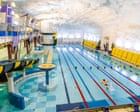
Helsinki harbors a vast subterranean world that rivals many above-ground tourist attractions. Beneath the Finnish capital's streets lies an underground city filled with swimming pools carved directly from granite bedrock, go-kart racing venues, playgrounds, art galleries, and concert halls. This hidden infrastructure transforms the way locals and visitors experience the city, especially during Finland's long, dark winters.
Itäkeskus uimahalli stands as the crown jewel of this underground network. Opened officially in 1993, this swimming hall was excavated from solid granite and creates an otherworldly environment. The ceiling soars with dramatic white rock formations that resemble a lunar landscape, complete with craggy hollows and natural peaks. Swimmers in backstroke position stare upward at this cosmic interior, the white stone undulating overhead while children's laughter echoes through the cavern. The experience feels less like visiting a public pool and more like discovering an alien world tucked beneath a Nordic city.
This subterranean approach to urban design reflects Helsinki's pragmatic response to climate and geography. Finland's brutal winters make outdoor recreation challenging from November through March. Rather than accept seasonal limitations, Helsinki's planners invested in carving functional spaces directly into the bedrock that underlies the city. The result transforms winter from a barrier into an irrelevance. Residents access swimming facilities, fitness centers, shopping areas, cultural venues, and entertainment without surfacing into subzero temperatures.
The underground network extends far beyond Itäkeskus. Multiple levels connect various districts, housing everything from retail shops to performance spaces. Art galleries operate in converted underground caverns, creating intimate gallery spaces with distinctive character. Concert halls and performance venues amplify sound naturally through the granite chambers. Go-kart racing tracks operate year-round without weather interference. This layered underground city functions as a genuine alternative to surface life rather than merely supplementary infrastructure.
For travelers visiting Helsinki, exploring these underground spaces offers genuine novelty. Most European cities feature subway systems and underground shopping arcades. Helsinki's subterranean world transcends pure utility. The granite chambers create aesthetic experiences unavailable topside. Swimming in Itäkeskus uimahalli costs roughly 7 euros for adults, making it accessible to budget travelers. Day passes grant access to multiple facilities across the network.
Winter visitors benefit most from this underground infrastructure. Helsinki's December through February daylight lasts mere hours, with the sun barely clearing the horizon. Spending days above ground means spending days in darkness. The underground network allows visitors to stay active, entertained, and engaged regardless of seasonal light deprivation. Families with children find particular value in covered playgrounds and swimming facilities that require no winter gear.
Summer visitors should not dismiss these underground spaces. Even with extended daylight and warm temperatures, Itäkeskus uimahalli offers escape from crowds and an unforgettable experience. The granite cavern maintains comfortable temperatures year-round, creating a stable environment.
Helsinki's underground development reflects innovation born from geographic necessity. Rather than fighting a difficult climate, city planners engineered solutions that transformed winter from obstacle into opportunity. This subterranean city deserves consideration as a travel destination itself, not merely a curiosity beneath a surface visit to Finland's capital.