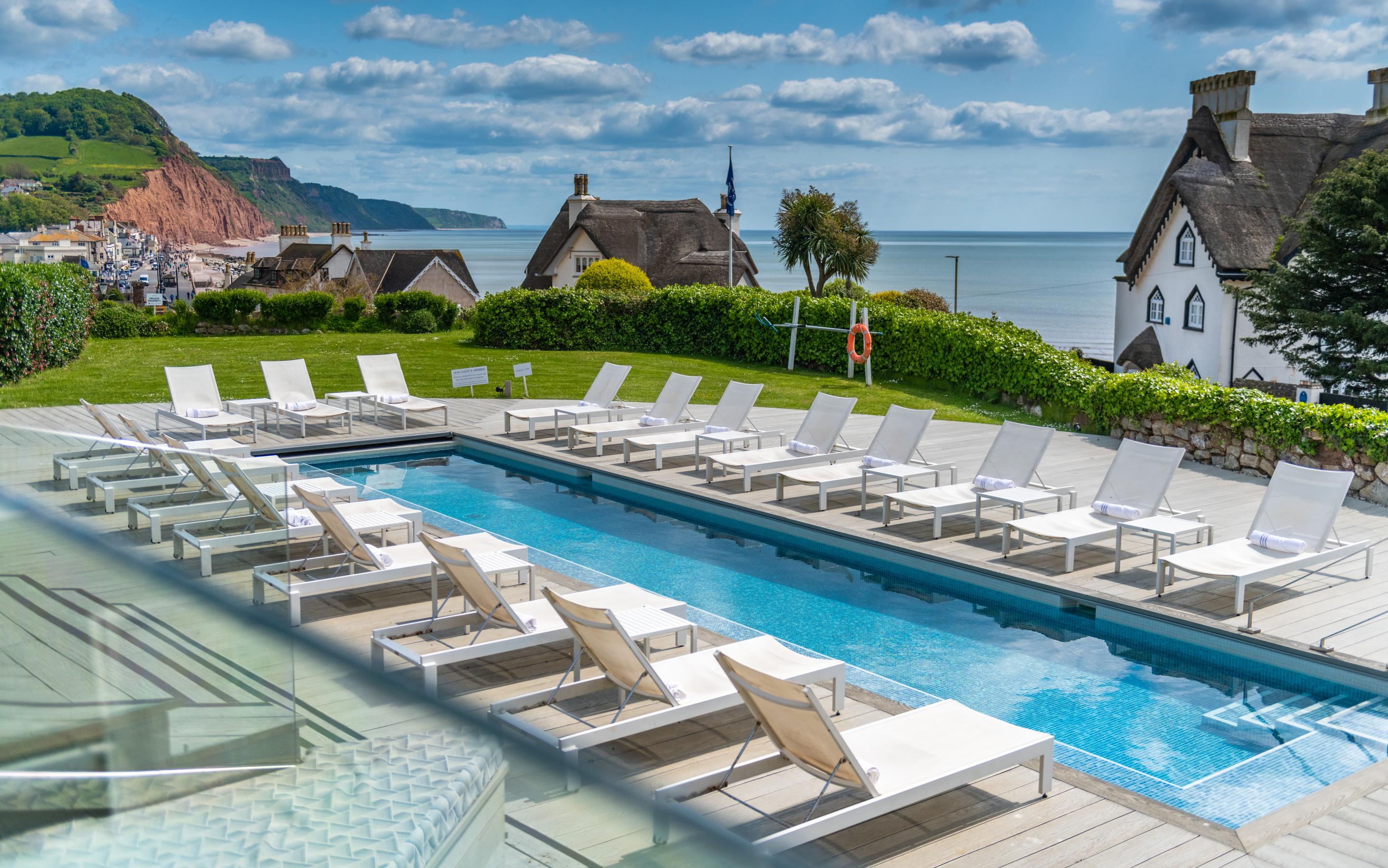
# Spa Luxury Meets Devon's Dramatic Coastline
Devon's spa hotel scene has evolved dramatically over the past five years. The county now attracts wellness-focused travellers seeking alternatives to overcrowded Alpine resorts and Caribbean islands. These properties blend coastal drama with serious wellness infrastructure, offering everything from seaweed wraps to meditation gardens overlooking the English Channel.
The trend reflects a broader shift in luxury travel. Post-pandemic, affluent British travellers increasingly favour domestic spa destinations. Devon benefits from two natural advantages: dramatic coastline and proximity to London (just four hours by rail). Hotel operators have capitalized on this by converting period estates into contemporary wellness hubs while maintaining their architectural character.
Coastal spa retreats dominate the market. These properties typically feature floor-to-ceiling windows capturing sea views, infinity pools positioned to merge visually with the horizon, and spa suites with private terraces. State-of-the-art wellness spaces include hydrotherapy pools, ice chambers, and saunas heated with locally sourced materials. Treatments lean heavily on marine therapies using Devon seaweed and salt harvested from nearby estuaries. Expect to pay 250 to 450 pounds per night at top-tier coastal properties, with spa treatments ranging from 85 to 180 pounds per hour.
Country house spas offer a different proposition entirely. These converted estates sit within rolling parkland, often featuring Georgian or Victorian architecture. Their appeal lies in seclusion and tradition. Outdoor pools heated year-round become focal points for relaxation. These properties typically occupy 50 to 100 acres, allowing guests to walk between woodland and open gardens. Pricing runs slightly lower than coastal competitors, roughly 180 to 320 pounds nightly, though suites and multi-day packages command premium rates.
The wellness offerings across both categories have standardized around certain treatments. Thermal suites with temperature-controlled zones become non-negotiable amenities. Spa menus feature hydrotherapy protocols lasting two to three hours, often combining water immersion with body treatments. Many hotels now employ naturopaths alongside traditional massage therapists. Meditation spaces and yoga studios overlooking natural landscapes have become standard rather than luxury differentiators.
Access patterns show clear seasonality. Summer months (June through August) attract families combining beach time with spa facilities. Autumn brings corporate retreat bookings and wellness weekends. Winter sees couples seeking romantic escapes paired with spa indulgence. Spring becomes the peak season for detox-focused multi-day packages, where guests commit to 48-hour or week-long wellness programmes with structured meal plans and daily treatments.
Transportation remains straightforward. Most properties lie within 30 minutes of Exeter Airport, served by airlines including Ryanair and Flybe. Rail connections from London Paddington reach Devon's major towns in under four hours. Self-driving offers flexibility for exploring the broader region between spa days.
The competitive landscape has intensified. Properties now differentiate through hyper-local sourcing, partnership with specific wellness philosophies (Ayurveda, traditional Chinese medicine), and experiential add-ons like foraging walks or culinary classes. These enhancements justify rate increases and build repeat visitation.
For travellers planning a British spa escape, Devon offers the efficiency of proximity to London combined with genuine landscape drama. Booking three to six months ahead secures preferred dates, particularly for school holidays and summer weekends.