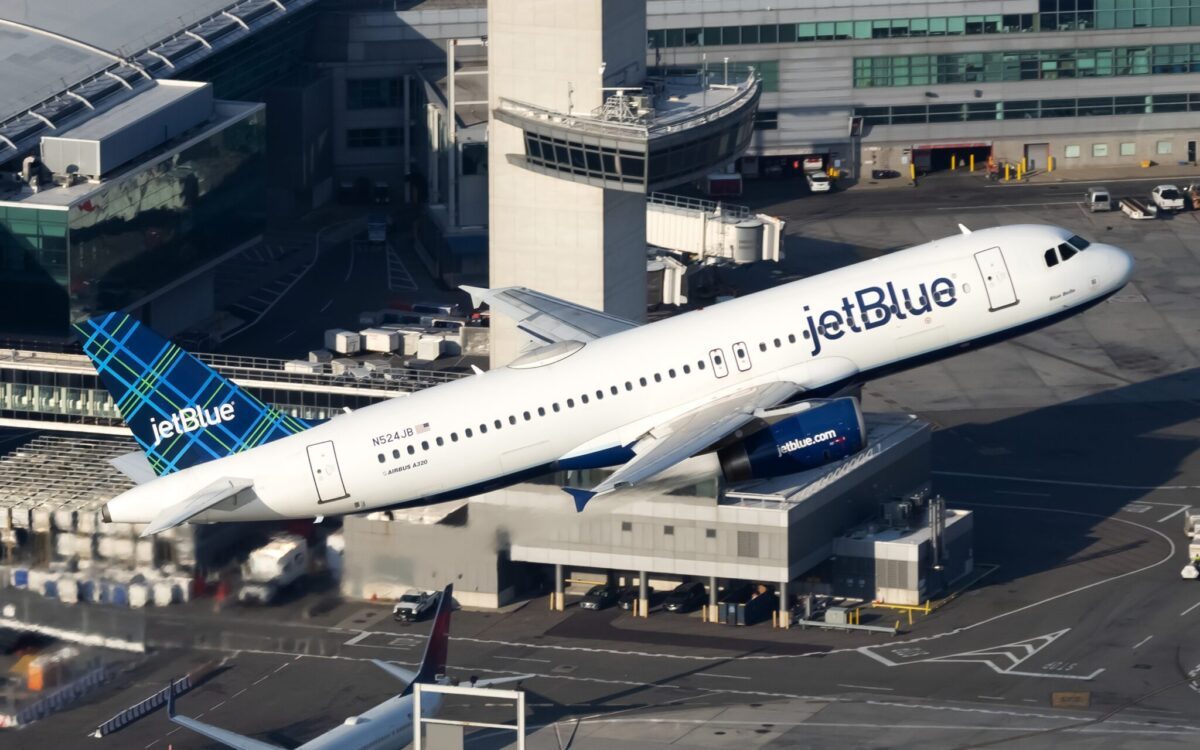
# JetBlue Charts Recovery Path as 2027 Profit Target Holds Firm
JetBlue Airways stock climbed Monday after the carrier reaffirmed its long-term profitability goals, signaling investor confidence in the airline's turnaround strategy despite recent market headwinds. The New York-based carrier, which operates over 1,000 daily flights across the Caribbean, Latin America, and the US East Coast, stands at a critical inflection point in its operational restructuring.
The reaffirmation matters because JetBlue has faced relentless pressure. Fuel costs, labor agreements, and competitive capacity across its core routes have compressed margins throughout 2024 and into 2025. The carrier's stock had traded down significantly before this announcement, reflecting broader concerns about whether the airline could sustain its growth trajectory amid economic uncertainty and price wars between major carriers.
By reiterating that 2027 represents an achievable milestone for returning to normalized profit levels, JetBlue's leadership provided concrete reassurance to shareholders nervous about execution risk. Airlines that publically walk back guidance destroy investor trust. JetBlue chose to stand by its numbers, a bold move that sent a message about management's confidence in operational improvements ahead.
The timing underscores where the airline industry sits today. Legacy carriers like American, United, and Delta have all reported compressed margins in recent quarters. Southwest Airlines completed its painful transformation toward assigning seats and charging for carry-ons. JetBlue, positioned between the legacy carriers and ultra-low-cost operators like Spirit and Frontier, occupies a crowded middle market. The carrier must justify why passengers should choose JetBlue over Southwest or low-cost alternatives on US domestic routes, while competing against Caribbean specialists and Latin American carriers on its international network.
JetBlue's path to 2027 profitability depends on several operational levers. The carrier has invested heavily in fleet modernization, bringing newer Airbus A321 and A220 aircraft online that burn less fuel and carry more revenue-generating seats than older narrowbody planes. Route optimization continues across Boston Logan and Fort Lauderdale, two anchors of JetBlue's network. Labor cost absorption from pilot and flight attendant agreements signed in 2023 and 2024 now rolls into baseline operations, reducing year-over-year cost growth heading into 2026 and 2027.
Revenue management remains the wild card. JetBlue must sustain premium leisure pricing in the Caribbean while defending market share on Northeast Corridor routes against Amtrak service improvements and regional carrier encroachment. International capacity additions to Latin America hinge on sustained demand from US leisure travelers and emerging middle-class consumers across Mexico and Central America seeking connectivity to the United States.
The stock rebound reflects Wall Street's recalibration. Investors had baked pessimism into valuations, pricing in failed turnarounds and further guidance cuts. Instead, JetBlue delivered confidence. Whether that confidence translates into actual 2027 earnings will depend on macroeconomic conditions, fuel prices, and the carrier's ability to execute route strategy without competitive retaliation from rivals desperate to fill seats.