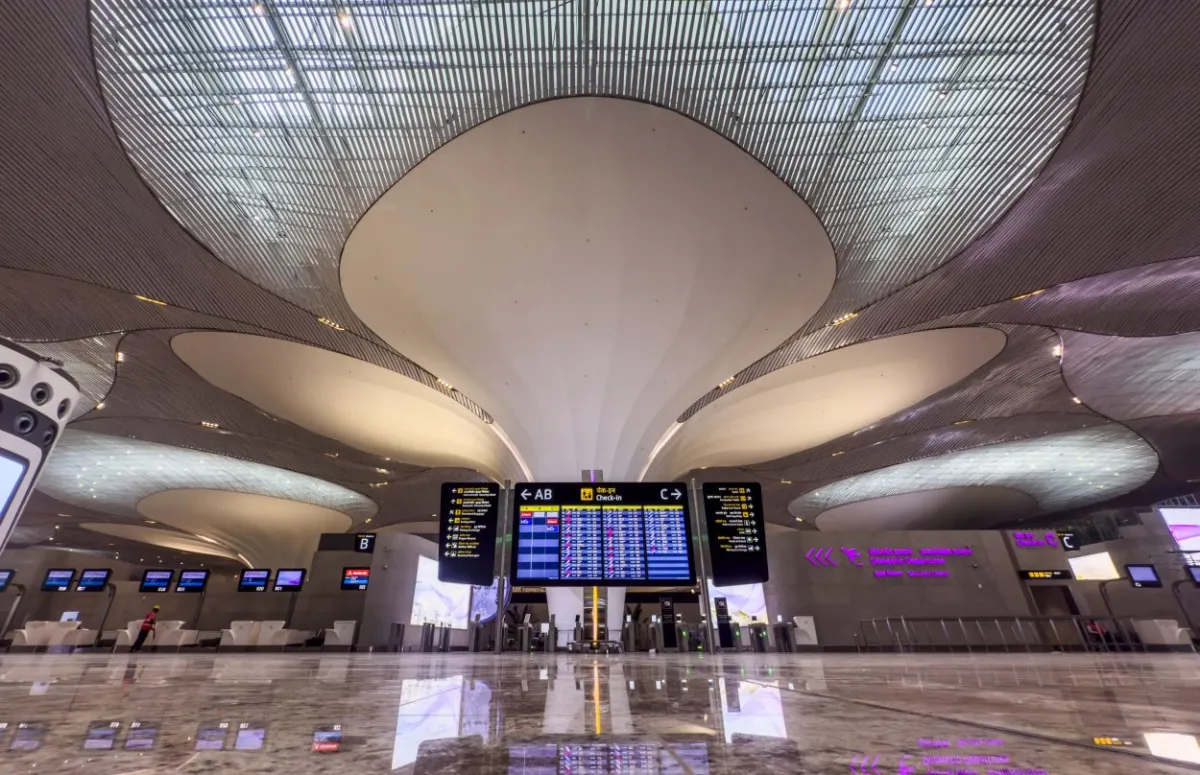
India's aviation landscape faces a major restructuring as IndiGo and Air India Group commit to gradually relocating their international operations to Navi Mumbai's new Adani-operated airport through 2027. This phased transition represents the most significant airport infrastructure shift in Indian aviation since the country emerged as one of the world's fastest-growing airline markets.
IndiGo, India's largest carrier by market share, and Air India Group, which includes Air India and Air Asia India, have agreed to move international flights away from Mumbai's congested Bombay Sardar Vallabhbhai Patel International Airport (formerly Mumbai International). The Navi Mumbai International Airport, developed by Adani Airports, opens its doors in 2024 and will operate as a second airport serving the metropolitan region through the gradual migration process.
The three-year transition timeline matters tremendously for the Mumbai aviation ecosystem. Rather than an immediate switchover that could cripple connections and strand travelers, both airlines will phase operations across 2024 through 2027. This staggered approach allows airport infrastructure to stabilize, ground handling services to expand, and connectivity networks to adjust. IndiGo operates roughly 3,000 daily flights globally, making its relocation logistically complex. Air India Group manages India's international connectivity backbone with extensive code-share agreements and Star Alliance partnerships.
The real test lies with foreign carriers. Adani's two-airport strategy succeeds only if international airlines like Emirates, British Airways, Singapore Airlines, and Qatar Airways follow the domestic carriers to Navi Mumbai. These carriers operate complex hub-and-spoke networks requiring seamless connections. Split operations across two airports create passenger friction, increase turnaround times, and complicate baggage handling. Foreign operators holding lucrative landing slots at the existing Mumbai airport show reluctance to abandon established infrastructure.
Navi Mumbai International Airport brings modern facilities including six runways at full build-out, enhanced cargo capabilities, and modern terminal infrastructure designed for 50 million annual passengers. Yet the airport's distance from Mumbai's CBD and existing ground transportation links remains a concern for business travelers accustomed to the central Mumbai airport's proximity.
Travel costs could increase during the transition. Navi Mumbai's operational costs during early years may filter through to ticket prices. Business travelers on routes like Mumbai to London, Singapore, and Frankfurt may face temporary schedule disruptions as airlines optimize operations between competing facilities. Leisure travelers benefit from the expanded capacity reducing congestion-driven delays and cancellations that plagued Mumbai aviation for years.
The agreement between India's two largest airline groups signals confidence in Adani's vision yet leaves the outcome dependent on foreign carrier adoption. If international airlines resist relocation, Mumbai maintains a fragmented aviation system with domestic operations at Navi Mumbai and international flights concentrated at the existing airport. This outcome defeats the congestion relief Adani pursued.
India's government supported this restructuring as part of broader infrastructure modernization, viewing expanded aviation capacity as essential to supporting projected 300 million annual passenger volumes by 2030. Success or failure at Navi Mumbai sets precedent for similar airport transitions in India's secondary metros including Bangalore, Hyderabad, and Delhi NCR.