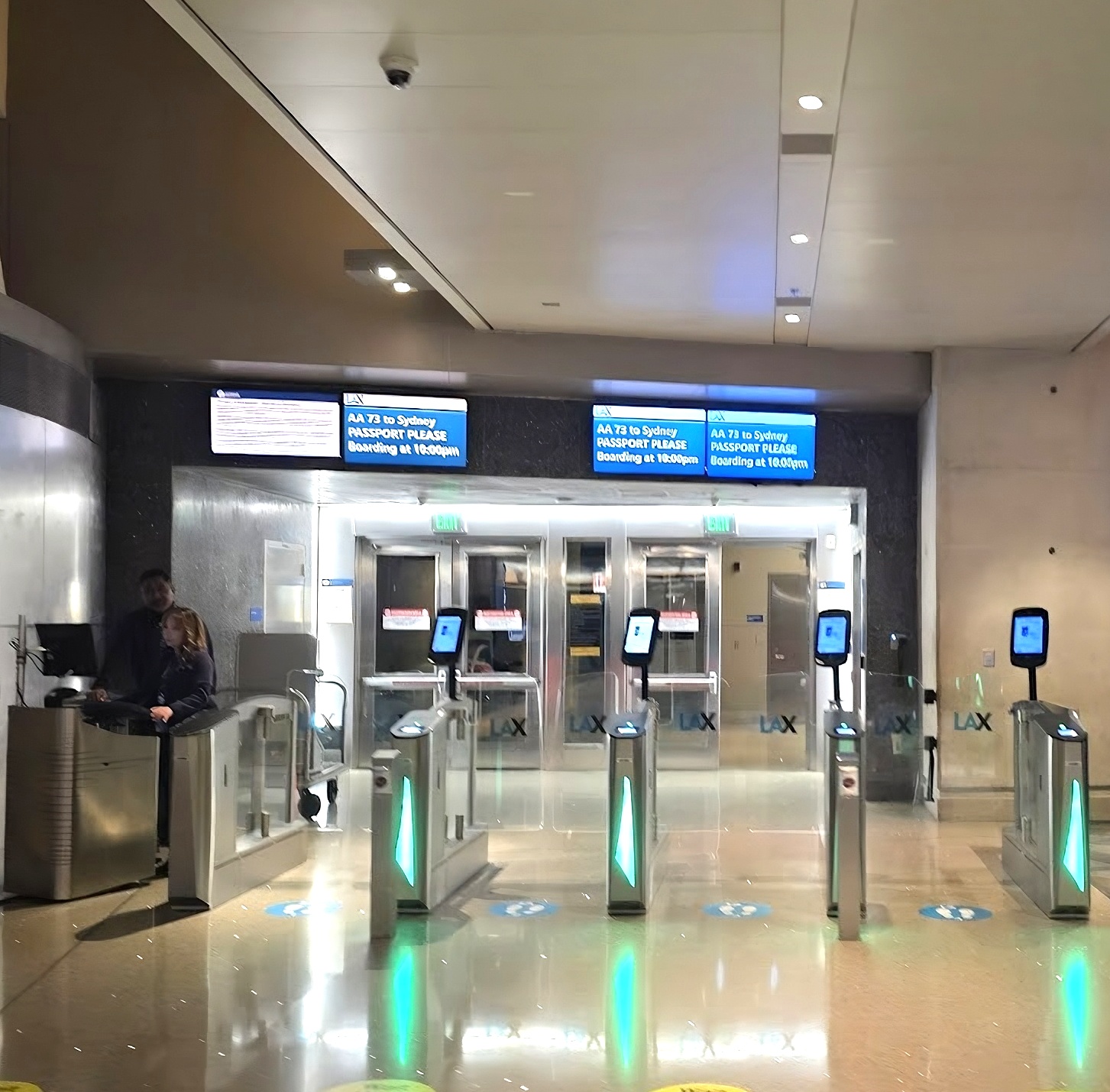
United Airlines CEO Scott Kirby flew American Airlines, spotted its new electronic boarding gates at Dallas-Fort Worth airport, and asked his team why United wasn't installing similar equipment. His employees responded that similar gates were already planned for Houston.
American Airlines opened its new DFW Terminal C pier with the technology at all nine gates. The glass barriers open after the system validates a boarding pass. American says the equipment controls the pace at which passengers enter the jet bridge, reduces manual work for gate agents, and lets employees spend more time helping customers.
The gates use facial recognition to confirm passenger identity during boarding. A camera takes a live photo of each passenger, which is sent to the Customs and Border Protection cloud-based Traveler Verification Service. That service compares each person's photo to a gallery built from passport or visa photos and checks it against the flight manifest. If there's a match, passengers are allowed to depart. If there's no match, they receive a manual document check.
Airports are increasingly moving to electronic gates for international departures. The government wants more than a person looking at passengers and confirming them against passport photos.
Yet the biggest boarding bottlenecks aren't scanning barcodes. Too many carry-ons, limited overhead bin space, gate-checked bags, families bunching up during preboarding, and standby processing at the gate create larger delays. These gates only manage queue access, not those issues.
Privacy concerns accompany the facial recognition technology. The manufacturer offers it as an optional feature. Where the data comes from, error rates, and what happens to photos afterward remain unclear.