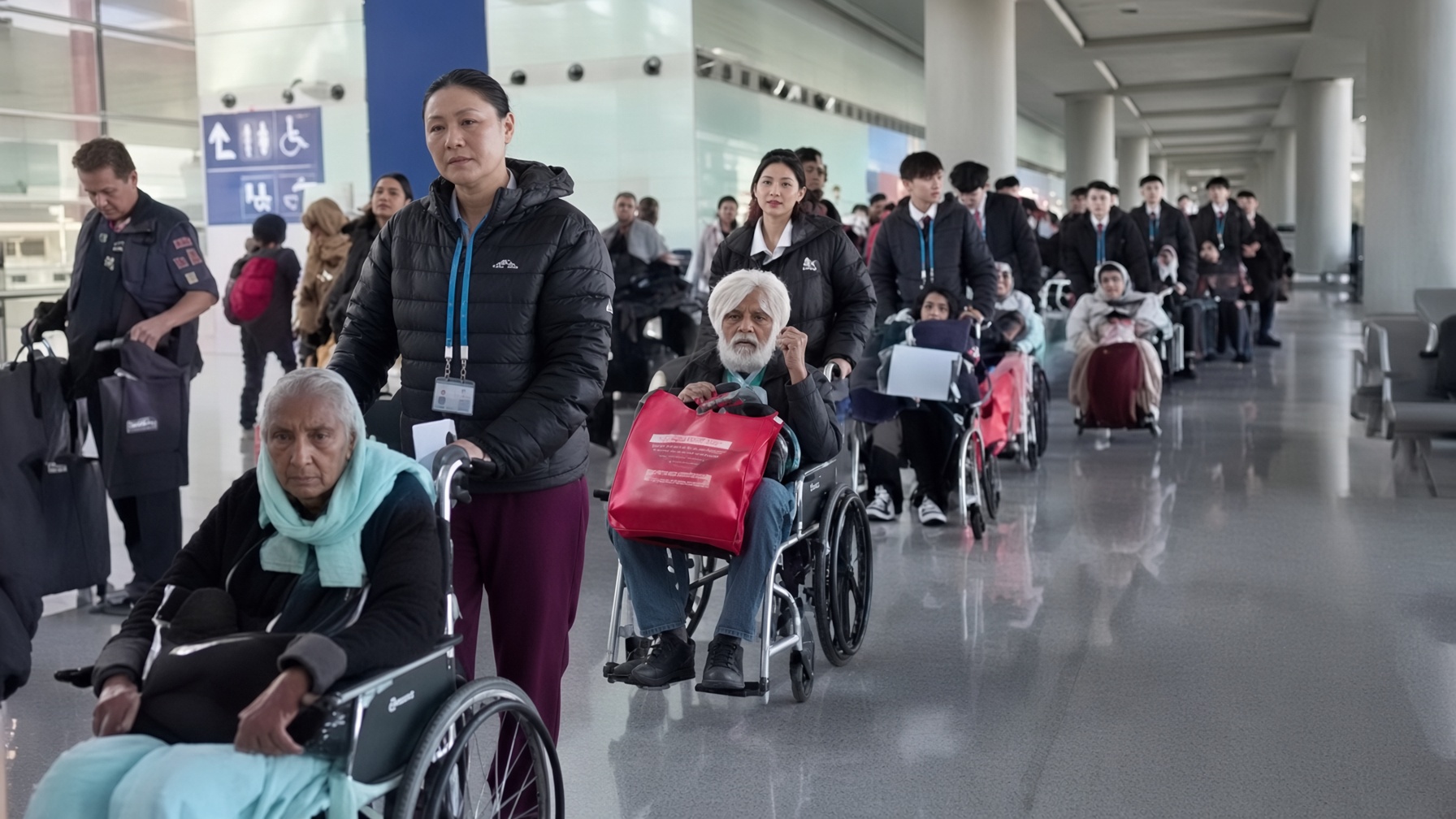
Passengers at Beijing Capital Airport sparked controversy by requesting wheelchair assistance to skip airport lines before flights to Toronto and Vancouver in early November, then walked normally upon arrival and shopped at duty free, according to videos and witness accounts. Around 20 wheelchair users appeared on some departures.
The incident reflects a broader pattern of passengers misusing wheelchair services. Southwest Airlines saw wheelchair requests fall after switching to assigned seating on January 27, according to Southwest Chief Operating Officer Andrew Watterson. Under the previous open seating system, early boarding meant first choice of seats, creating incentive to request wheelchairs unnecessarily. Frontier Airlines estimated wheelchair costs at $30 to $35 per request in 2024.
Requests for assistance provide multiple benefits beyond boarding priority. Depending on the airport, they can mean shorter check-in, security, or immigration queues, plus someone to guide passengers through the terminal and early overhead bin access. Reports have documented over 60 wheelchairs prepared for a single Taipei departure to the United States, and wheelchair requests from nearly 30 percent of passengers on some Air India long haul routes.
Beijing offers an escort service as an alternative for passengers needing help finding gates or managing language barriers.
The core issue affects genuine wheelchair users. Limited chairs and staff mean someone who truly needs assistance waits longer after landing when attendants are occupied providing unnecessary help to others.