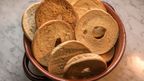
Friselle, a twice-baked bread ring from Puglia in southern Italy, can last a year when stored airtight in a dark, dry place. The traditional bread's longevity stems from its production method. Bakers use sourdough-based dough, partially bake it for around 40 minutes, then split the rings with twisted wire and bake them again for about an hour and a half. This second bake drives out nearly all moisture, preventing mould growth that requires water to flourish.
Gianfranco Parisi, whose grandfather opened a wood-fired bakery in San Pietro Vernotico near Brindisi in the early 20th century, explained the process. "We used a special dough with a bit of sourdough starter, which made them more flavourful," he said. The rough cut sides from the wire allow better absorption of water and flavour when eaten.
Rosaria Canoci, who bakes friselle in Lendinuso, says they will keep for a year if kept sealed and stored properly. Traditionally, bread rings were threaded onto cords and hung up to protect them from moisture and insects.
Friselle originated from practical need in Puglia, where seafarers and farmers required portable provisions for long journeys. Food historian Flavia Giordano traces twice-baked sailors' bread back nearly 2,000 years, citing Pliny the Elder's description of panis nauticus in the 1st Century CE. The bread later sustained crusaders, pilgrims, and explorers traveling through Puglian ports.
To eat friselle, you soften them in water through a ritual called la sponzatura, then top them with ingredients like local tomatoes, peppers in olive oil, capers, wild oregano, and marinated aubergine. Modern Puglian bakeries offer friselle in barley, spelt, and multigrain varieties, sometimes flavoured with fennel seeds or peperoncino. At La Putea delicatessen in Lecce, chef Francesco Paladino creates "deconstructed friselle" with passata, prosciutto, and artichokes. In Sicily, they're dipped in milk for breakfast. In Campania, softened friselle serve as the base for caponata napoletana with tomatoes and olives.