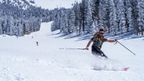
The Arizona Snowbowl sits 150 miles north of Phoenix on Mount Humphreys, a dormant volcano within view of the Grand Canyon and Route 66. The resort opens in November and stays operational through May, with the 2025 season running a record 185 days and ending in early June.
Skiers access 777 skiable acres across 61 runs via gondola and chairlifts that climb to 11,500 feet. The resort receives roughly 260 inches of snow annually, though about 65% of trails now rely on artificial snow produced from reclaimed wastewater to ensure reliable winter operations.
The Snowbowl opened in 1938, decades before major US resorts like Vail, Aspen, or Breckenridge. Two Norwegian brothers, Ole and Peter Solberg, introduced skiing to northern Arizona in 1915 by descending a local hill with homemade wooden skis. The first winter carnival on the San Francisco Peaks took place in 1933. The US Forest Service then built a road up Mount Humphreys, constructed a log cabin lodge, and installed a rope-tow powered by a car engine.
The resort appeals to skiers seeking variety. Ray Skeels, a longtime attendee, calls it "basically spring skiing all winter" with ideal morning conditions and no need for heavy winter gear. Wide, gentle slopes suit beginners while hundreds of acres of off-piste terrain serve experienced skiers. The Flagstaff Ski & Snowboard Team trains 180 athletes at the Snowbowl.
Over 100 years of operation have built a tight community. Lynda Fleischer, a Snowbowl instructor, has worked and played there for over 50 years, gotten married there, and taught for 28 seasons.
The resort's expansion and reliance on reclaimed wastewater for snowmaking have sparked disputes. More than a dozen Native American tribes consider the San Francisco Peaks sacred. Six tribes have sued the US Forestry Service, which owns the land, claiming the use of treated sewage violates their freedom of religion. Courts have ruled against the tribes' claims, and US regulators maintain the filtered wastewater is safe.