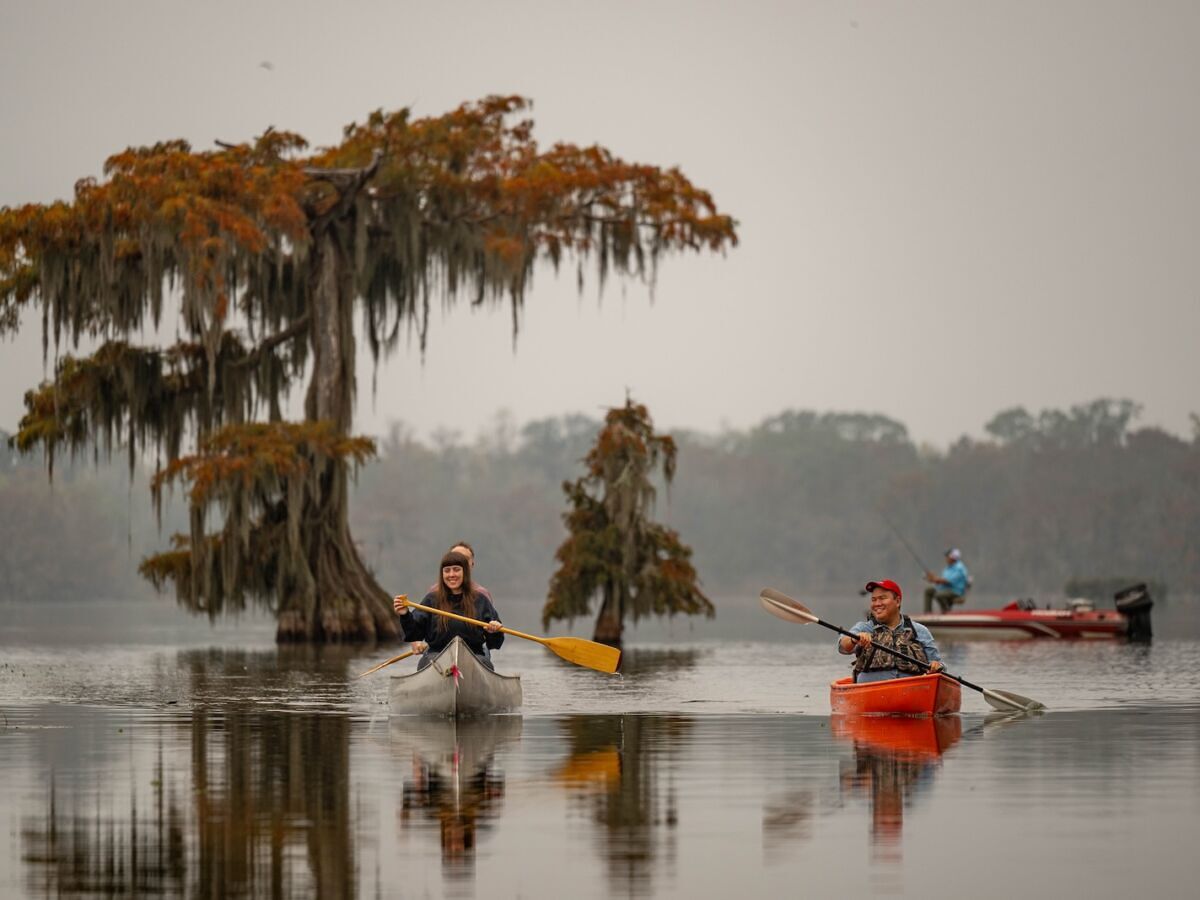
When Hurricane Laura knocked down roughly 80 percent of Sam Houston Jones State Park's trees in August 2020, it seemed the natural attractions that draw visitors to Southwest Louisiana might be lost forever. The park's gates stayed shut until Memorial Day 2022, a painful reminder that the landscapes tourists come to experience are fragile. But the restoration project announced in June 2026 offers a compelling model: Woodside Energy's $5 million commitment over six years to restore more than 800 acres of forest habitat represents the largest corporate donation ever received by a Louisiana state park. This partnership between Louisiana State Parks, Woodside Energy, ecological restoration firm RES, and McNeese State University demonstrates that sustainable tourism requires sustainable landscapes.
The work ahead is substantial. RES, founded in Louisiana in 2007, will remove invasive species, plant about 245,000 native flora, and use prescribed burns to help longleaf pines regenerate. The goal is a more resilient forest that reduces wildfire risk and better withstands future storms. This matters not just for conservation—it matters for the travelers who come to hike through the park's roughly 1,100 acres, sleep in its ten cabins with screened porches, and boat on the west fork of the Calcasieu River. A destroyed ecosystem cannot sustain tourism.
What makes this effort particularly promising is its commitment to transparency and education. McNeese State University will lead biodiversity research supporting four postgraduate students, and visitors can follow along through volunteer activities, educational outreach, and a project story map reachable by QR code in the park. This invites travelers to understand that these landscapes are living ecosystems requiring sustained care—not static backdrops for vacation photos. When tourists grasp that their visits depend on active restoration, they become stakeholders in conservation.
Yet the Sam Houston Jones project, however ambitious, cannot stand alone. Lake Charles and Lafayette reward the curious with Cajun and Creole traditions, the Creole Nature Trail All-American Road's 180 miles of wetlands and Gulf-front communities, and the Atchafalaya Basin's ancient cypress and folklore. The Mardi Gras Museum of Imperial Calcasieu opened in 2026; Vermilionville Living History Museum interprets cultures from 1765 to 1890 across 23 acres. These attractions thrive when their surrounding ecosystems remain intact.
Tourism boards and state agencies promoting destinations like Lake Charles and Lafayette should take note: investment in ecological restoration is not separate from tourism infrastructure—it is tourism infrastructure. The model established at Sam Houston Jones, where corporate funding drives habitat recovery visible to visitors, should inform how other popular destinations approach their own post-hurricane rebuilding. Travelers don't just want to experience Louisiana's culture and wildlife. They want to know those experiences will exist for future families to enjoy, as Lieutenant Governor Billy Nungesser stated. That commitment requires funding ecosystem health as enthusiastically as funding museums and restaurants.