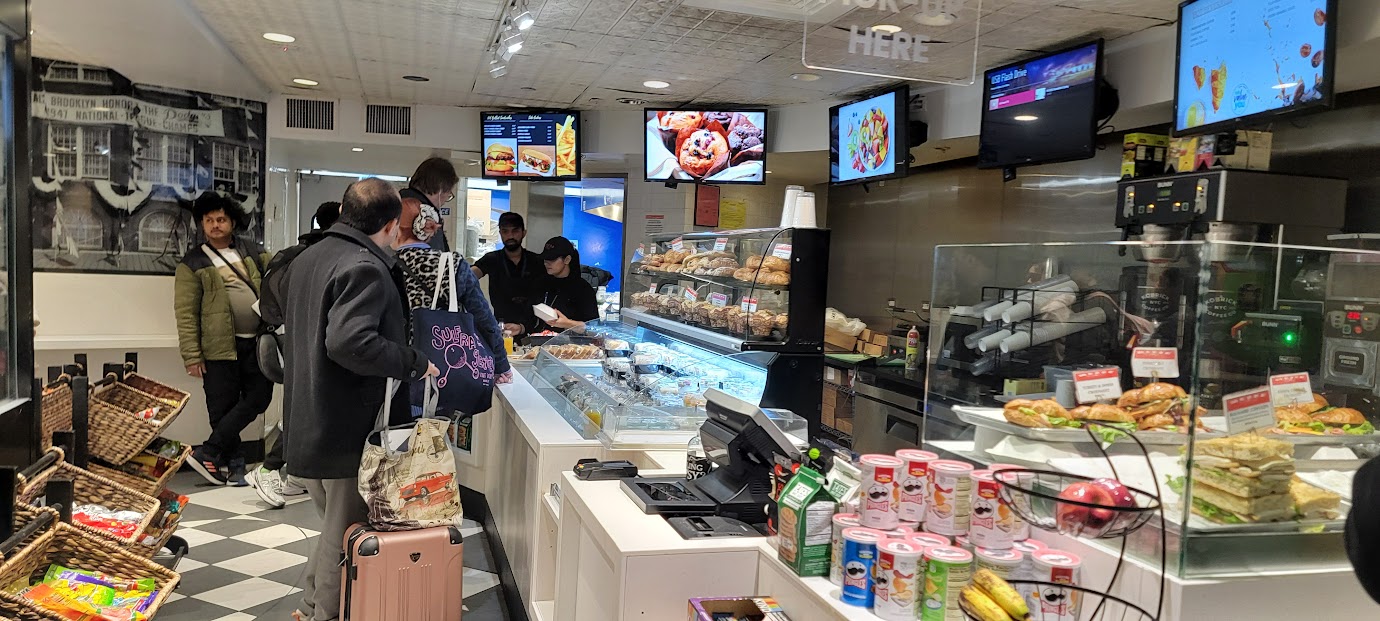
A $7 bottle of water at an airport reveals the economics behind terminal pricing. Airports promise that vendors charge street prices or street prices plus an allowed premium, yet many airports approve higher prices while collecting revenue from merchants. The Port Authority of New York and New Jersey defended a $6.89 water bottle by calling Hudson a specialty market, though its own manual requires comparisons to convenience stores for bottled drinks.
Airports operate as landlords extracting revenue from merchants. They charge rent plus a percentage of sales, control operating schedules, and limit storage and construction options. Dallas-Fort Worth's 2025 budget showed $120.1 million in non-airline revenue from concessions going toward terminal costs, reducing what airlines had to pay. The airport approved a roughly $1 million project to remove moving walkways in terminal D and add retail seating, with the concessions executive expecting about $2 million in revenue within two years. United removed eight moving walkways inside Chicago O'Hare's C concourse for the same purpose.
Operating costs in airports genuinely run higher than street locations. Deliveries require screening and controlled routes. Supplies need centralized distribution. DFW opened a 90,000 square foot receiving and distribution center. Merchants may operate unprofitable hours late into the evening to serve final flights.
Some airports impose additional fees beyond street pricing. The Port Authority permits a 3% employee wage and benefit fee on top of street price plus 15%. At JFK, a $21.99 book carried a 3% employee retention fee. Austin required a minimum penny tip at self-checkout card payments, with zero as not an option.
Portland showed closer compliance with street pricing rules. Its 2024 convenience retail lease combined street pricing with rent tiers of 18% to 22% of sales for locations past security, plus a 1% delivery fee and metered utilities.
Starbucks prices across airports varied significantly. A grande coffee cost $3 in Salt Lake City and $5.05 in Phoenix, Las Vegas and Los Angeles. Phoenix had dropped its street pricing requirement.