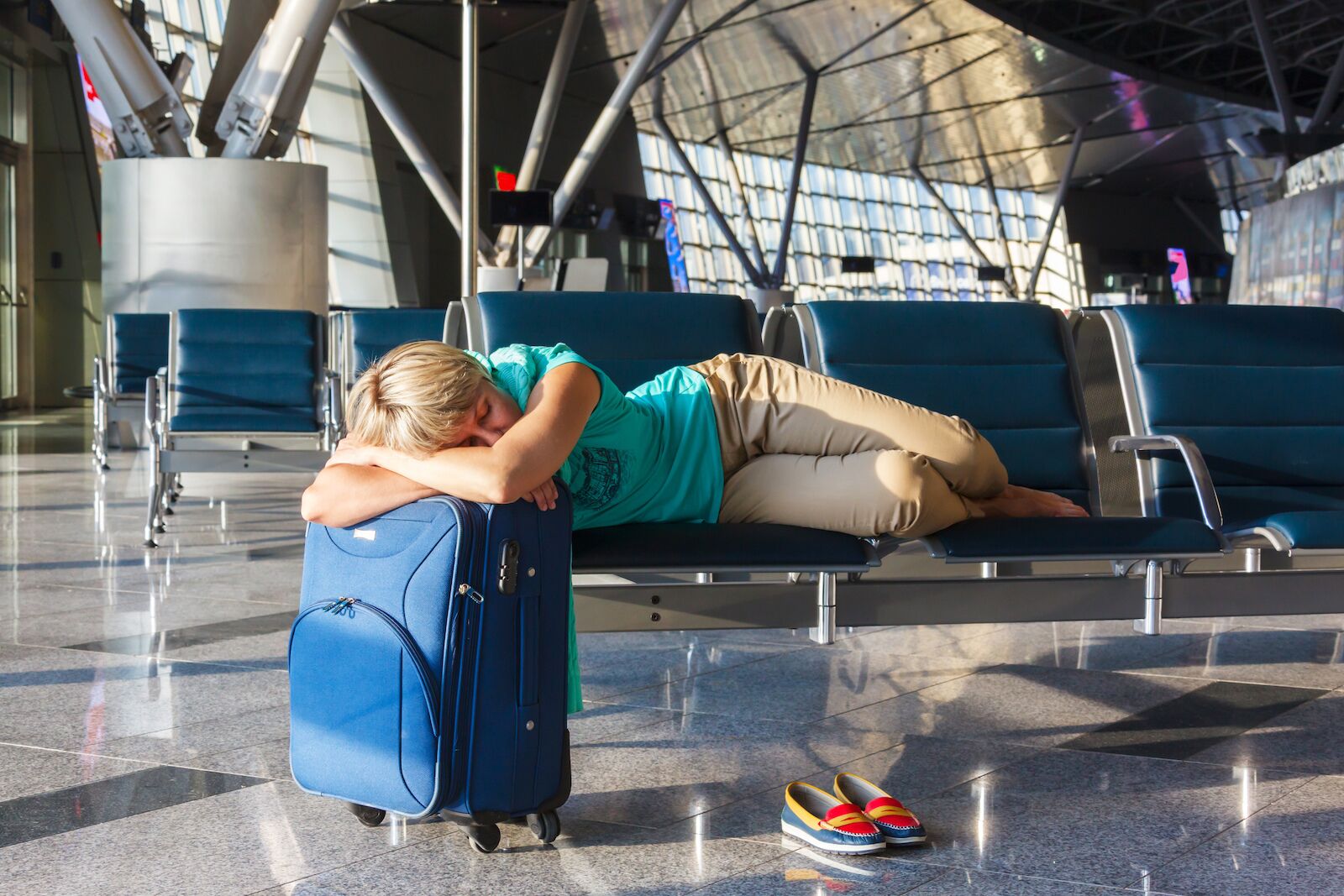
# Sleeping Smart at Airports: Expert Strategies for Transit Rest
Airport layovers and early morning flights drain travelers, but sleeping between gates remains awkward, uncomfortable, and often against official rules. A travel expert now reveals practical strategies that balance rest with airport protocols, helping jet-lagged passengers recover without getting ejected from the terminal.
The core challenge sits at the intersection of exhaustion and environment. Airports run 24/7, but they operate under strict policies. Many terminals discourage sleeping to prevent security issues, obstruction of pathways, or liability concerns. Yet passengers regularly find themselves stranded for 6, 8, or even 12 hours between connections. Low-cost carriers like Ryanair and budget Asian airlines often schedule grueling itineraries that leave travelers with no viable hotel option.
Sleep pods offer one solution. Major airports including London Heathrow, Munich, and Singapore Changi operate dedicated nap facilities. A two-hour pod at Heathrow runs around £15 to £25. Amsterdam Airport Schiphol and Copenhagen Airport both maintain similar services. These facilities provide privacy, climate control, and actual beds, making them the premium option for travelers with cash to spare and layovers exceeding four hours.
For budget travelers, strategy matters more than luxury. The expert recommends timing your rest. Sleeping during peak traffic hours (roughly 8 a.m. to 6 p.m.) draws less attention than sleeping at 2 a.m. when security patrols intensify. Dress professionally and claim a seat near charging stations or family areas, not on empty benches. Airport staff monitor lounges more closely than open seating near gates.
Specific airport designs favor sleepers. Terminals with hidden alcoves, closed gate areas, or multi-level seating offer more privacy than open concourses. Gates designated for late-night flights tend to remain quieter than hub terminals. At Orlando International Airport or Las Vegas McCarran, for example, certain zones empty after certain hours.
Noise-canceling headphones and an eye mask cost under £50 combined but prove invaluable. Melatonin supplements, available at airport drugstores, help reset circadian rhythms disrupted by red-eye flights. Compression socks aid circulation during extended sitting.
The expert also emphasizes hygiene. Airport floors collect bacteria. A light blanket or airline-supplied blanket creates a barrier between yourself and the surface. Most airports allow blanket use since passengers often receive them aboard flights. Hand sanitizer and face wipes matter more than comfort here.
Airport lounges remain the legitimate shortcut. Priority Pass memberships grant access to 1,400+ lounges worldwide, costing £200 to £500 annually. United Club passes, American Airlines Admirals Club, and Lufthansa Senator lounges offer recliners and beds. Even a single-use lounge pass (£15 to £35) can transform a brutal layover into manageable rest.
Timing connections strategically prevents the sleeping dilemma altogether. A 3-hour layover at a hub like Amsterdam or Dallas-Fort Worth leaves minimal sleep opportunity. But a 7 to 10 hour connection at quieter airports like Lisbon, Porto, or Krakow offers genuine rest without rushing to catch your next flight.
The reality remains that airport sleep never matches hotel comfort. But following these strategies beats arriving at your destination exhausted. Travelers planning connections through major hubs should research terminal layouts in advance, budget for either a sleep pod or lounge access, and accept that airport rest is a survival tactic, not relaxation.