# Summer on the Slovenian Riviera: Europe's Most Underrated Coastal Secret
Slovenia's Adriatic coastline ranks among Europe's shortest at just 47 kilometers, yet it delivers outsized rewards for travelers seeking alternatives to overcrowded Mediterranean hotspots. The Slovenian Riviera combines pristine nature reserves, historic Venetian architecture, and a serious food culture that rivals destinations ten times its size.
The country's coastal region centers on Istria, the Adriatic's largest peninsula. Here, salt-colored horses graze in the Dragonja valley, where electric-blue dragonflies dart above rivers flanked by olive trees and terraced vineyards. The landscape slopes dramatically toward crystalline waters, with ancient salt pans creating geometric patterns that catch the morning light. These solinas, working salt marshes rather than abandoned industrial relics, represent centuries of Adriatic heritage still very much alive.
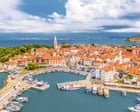
Slovenian coastal towns wear their Venetian past visibly. Piran, the Riviera's jewel, rises directly from the Adriatic with narrow medieval streets, candy-colored shutters, and a 15th-century fortified wall. Izola and Koper follow suit, each offering that Italian-inflected charm without the Venice-sized crowds or Venice-sized bills. Accommodation ranges from family-run guesthouses charging 80-150 euros per night to boutique hotels exceeding 300 euros. Camping remains popular and affordable across the region.
The foodie scene deserves separate mention. Istrian cuisine blends Italian, Austrian, and Mediterranean influences. Fresh pasta with black truffle shavings, local Teran wine aged in limestone cellars, and grilled sea bass caught that morning represent the baseline, not the splurge. Restaurants in smaller towns serve three-course dinners for 25-40 euros. Larger establishments in Piran demand 60-100 euros for tasting menus.
Access proves straightforward. Ljubljana airport sits 130 kilometers north, with budget carriers including Ryanair and Wizz Air maintaining regular service from major European hubs. Ground transportation is smooth: buses reach coastal towns in 2.5 hours, rental cars offer flexibility for exploring inland wine villages, and a narrow-gauge railway connects Ljubljana to the coast on summer weekends.
Wildlife reserves dominate the coastline. Secovlje Salina, Europe's largest salt-production facility, functions simultaneously as a nature preserve where flamingos, herons, and egrets winter. The Piran Bay and Strunjan cliffs support endemic Mediterranean chasmophytes and nesting seabirds. Divers explore underwater caves and Austro-Hungarian wreck sites in waters averaging 16-18 degrees Celsius in summer.
Timing matters. July and August bring crowds and peak prices, but June and September offer warm seas (around 22 degrees) with thinner visitor volumes. Winter sees many restaurants close, though the region's mild climate allows October beach days. Spring wildflowers carpet the Dragonja valley through May.
Travel costs remain below Western European standards. Daily budgets of 60-80 euros cover modest accommodation, meals, and entry fees. Mid-range travelers spend 120-180 euros daily. Even luxury seekers find five-star experiences cheaper than comparable offerings in Croatia's Dalmatian coast or Italy's Amalfi region.
The Slovenian Riviera appeals to travelers fatigued by mass tourism but unwilling to sacrifice Mediterranean authenticity, culinary excellence, or natural beauty. This corner of the Adriatic remains Europe's best-kept coastal secret.