# Socialist-Era Hotels Become Unlikely Tourist Draw Across Eastern Europe
A new photography book captures the brutalist grandeur of state-built hotels that once served Communist officials and ordinary citizens across Eastern Europe and the former Soviet Union. "Socialist Hotels" by Elena Amabili, published by FUEL, offers the first comprehensive visual documentation of these architectural relics, revealing how utilitarian hospitality design became an unexpected cultural artifact.
These concrete behemoths emerged during the Soviet era as part of centralized tourism and government infrastructure. Hotels in Moscow, Budapest, Prague, Warsaw, and lesser-known cities like Minsk and Tbilisi received state funding for construction and operation. They housed delegations, bureaucrats, and domestic travelers during an era when private hospitality barely existed. The buildings reflected the era's philosophy: function over aesthetics, collective benefit over individual comfort, durability over style.
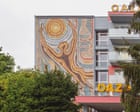
Today, many of these properties still operate. Their brutalist facades feature geometric patterns, massive overhangs, and sculptural forms that once symbolized modernist progress. Interiors often retain original furnishings: heavy wooden furniture, patterned carpets, and institutional color schemes that feel frozen in time. Guests enter lobbies with soaring ceilings and sparse decoration that conveys both grandeur and austerity.
Travel patterns have shifted dramatically since communism's collapse. Western hotel chains flooded Eastern Europe after 1989, establishing Marriotts, Hiltons, and Radissons in Prague, Warsaw, and Budapest. Yet socialist hotels persisted, many adapting to post-Soviet capitalism. Some became budget options for cost-conscious travelers. Others transformed into quirky heritage experiences, attracting photographers, architects, and cultural tourists seeking authenticity over luxury.
Properties like the Hotel Ukraina in Moscow (now Radisson Royal), the Beirut in Tbilisi, and the Thermal Hotel in Budapest became Instagram destinations. Architecture enthusiasts specifically book rooms to photograph the interiors. Design students travel to sketch the brutalist details. Travel journalists document the remaining examples as living museums of Cold War ideology.
Amabili's project documents this vanishing landscape before further renovations erase the original character. Many hotels face demolition or complete modernization as land values spike in capital cities. Some maintain their period features deliberately, marketing authenticity to niche audiences. Others strip away concrete and replace interiors with contemporary designs.
Travellers planning Eastern European trips now face choices. Standard hotel chains offer predictable comfort. Socialist-era properties offer character, history, and photographs worth publishing. Budget airlines like Wizz Air and Ryanair make visiting these cities affordable, allowing travelers to stay in heritage hotels rather than expensive new properties.
The book serves heritage preservation and travel inspiration simultaneously. Amabili's photographs reveal how political systems manifest in architectural form. Brutalist hotels embodied communist ideology about public works, state planning, and equal access to hospitality. Today they represent a specific historical moment now gone forever.
These hotels demonstrate how travel accommodations reflect their era. Contemporary travelers seeking authentic experiences increasingly value these preserved spaces over generic comfort. The socialist hotel movement lasted roughly four decades. Its physical remains persist longer, offering windows into how governments once shaped tourism and community spaces.