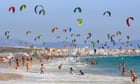
Tarifa remains Europe's most authentic wind-sport capital, a medieval walled town perched 14 kilometers from Morocco across the Strait of Gibraltar. This southern Spanish coastal gem delivers dual appeal: serious athletes chase world-class kitesurfing and windsurfing conditions while families anchor themselves to endless stretches of quiet beach backed by pine-shaded dunes and seafood shacks.
The town's 1,000-year-old fortified center pulses with youthful energy after dark. Narrow cobblestone streets wind between tapas bars and late-night clubs that don't peak until midnight. This isn't Ibiza or Barcelona. Tarifa attracts a self-selecting crowd of adventurers, windsurfers, and travelers fleeing mass tourism. Summer crowds arrive, but the atmosphere stays purposeful rather than raucous.
Geography defines the appeal. The 35-kilometer coastline stretching north from Tarifa divides into distinct zones. Los Lances Beach anchors the south, fronted by the iconic Santa Catalina castle, a 10th-century fortress that defines Tarifa's skyline and serves as the town's emblem. This beach suits families seeking shade and accessible amenities. North lies Valdevaqueros, where kitesurfing schools and rental operators cluster along the shore. The constant Atlantic-Mediterranean wind corridor that funnels between Europe and Africa creates near-perfect conditions for boarders nine months yearly.
Further north, Bolonia offers ruins of the Roman settlement Baelo Claudia alongside gentle family-friendly beaches. The village of Zahara de las Atunes completes the coastal circuit with a working fishing port aesthetic, colorful boats, and seafood restaurants serving fresh catch daily.
The town's evolution from isolated fortress to international wind-sport hub occurred organically. Windsurfers discovered the relentless winds in the 1980s, then kitesurfers followed in the 2000s. Unlike manufactured resort developments, Tarifa grew authentically around the athletes who came to chase swells and wind patterns. This foundation shapes the current character: authentic rather than polished, athletic rather than leisurely, Spanish rather than internationalized.
Accommodation ranges from backpacker hostels clustered in the medina to mid-range hotels and beach clubs offering direct access to water sports. Most visitors base themselves in town for nightlife proximity while day-tripping along the coast or launching from beachfront schools. Prices remain reasonable compared to Barcelona or Madrid, with mid-range hotels averaging 80-120 euros nightly during summer.
Dining centers on fresh fish and seafood. Local specialties include espetos (grilled sardines) eaten directly off skewers at beachside chiringuitos (beach bars). More formal restaurants in town serve elaborate seafood preparations alongside Andalusian wines. The beach bars themselves define the Tarifa experience: wooden tables in sand, cold gazpacho and fried fish, sunset views toward Morocco.
Summer represents peak season when Spanish families arrive. Spring and fall offer superior conditions for serious wind-sport athletes, with fewer crowds and more consistent winds. Winter remains viable year-round, though water temperatures drop and family-focused tourism recedes.
For travelers seeking Spanish authenticity combined with legitimate adventure sports access, Tarifa delivers without the commercialization that dominates Costa del Sol resorts 300 kilometers east. The convergence of medieval town character, world-class kitesurfing conditions, and undeveloped coastline makes Tarifa the Southern Spain destination for travelers willing to venture south of the typical tourist circuit.