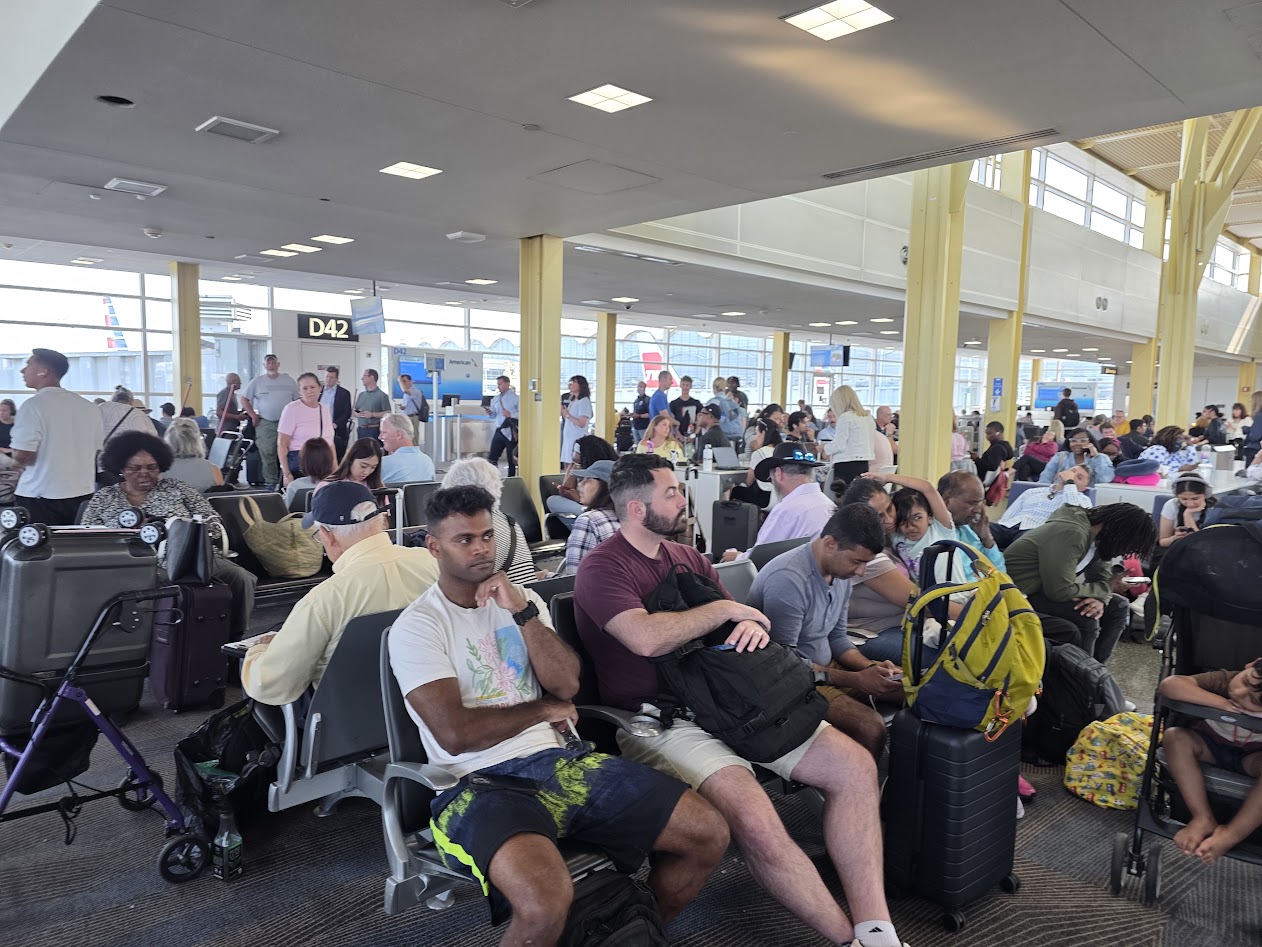
A single weather delay at Washington National Airport cascades into hours of disruption across an airline's entire network, even after skies clear, because aircraft and crews become separated during the initial disruption.
When a storm grounds flights, planes end up in the wrong cities and crews miss their scheduled connections. American Airlines experienced this firsthand when a delayed flight from Washington National created a domino effect. A missing flight attendant forced crew reassignments across multiple flights, multiplying delays far beyond the original weather event.
Airlines design schedules with razor-thin margins. A plane scheduled to operate five flights daily has no buffer when one leg runs late. That aircraft falls behind for the rest of the day. Crews face the same problem. A pilot or flight attendant stranded in an unexpected city cannot make their next scheduled flight hundreds of miles away.
The industry calls this "schedule recovery," and it typically takes hours to untangle. Airlines must reposition aircraft to where they are needed, often deadheading (flying empty) planes back into service. Crews require rest periods mandated by federal regulations, limiting how quickly they can resume flying. Passengers booked on subsequent flights suffer collateral delays even though weather no longer affects operations.
This explains why airlines invoke weather hours after conditions improve. Technically accurate, the statement obscures the real problem: operational fragmentation caused by the initial disruption. The airline faces a recovery challenge, not an active weather event.
For travellers, this means booking flights early in the day reduces exposure to cascade delays. A 6 a.m. departure has far fewer connections behind it than a 6 p.m. flight. Building extra time into connections also helps. Passengers booked tight between flights risk missing connections when upstream delays accumulate.
The solution remains elusive. Airlines resist schedule padding because it reduces efficiency and increases costs. Passengers expect affordable fares, which depend on high aircraft