# Family Hotels in the Canary Islands: Where to Stay With Kids in Spain's Island Paradise
The Canary Islands deliver year-round sunshine, volcanic landscapes, and reliable family entertainment without requiring a transatlantic flight. Spain's Atlantic archipelago has evolved beyond its package-tour reputation to offer thoughtfully designed family hotels that cater to everything from toddler-friendly amenities to teenage adventure seekers.
The islands span vastly different personalities. Tenerife commands the largest share of family tourism, anchored by resorts in Playa de las Americas and Puerto de la Cruz. Gran Canaria attracts families to Maspalomas and Playa del Inglés with their sprawling golden dunes and calm waters. Lanzarote appeals to families seeking less commercialized alternatives, with its lunar landscapes and smaller resort footprints. Fuerteventura and La Palma attract intrepid families willing to venture beyond the mainstream resort circuit.
Family hotel options split into clear categories. All-inclusive mega-resorts like those operated by TUI and Barceló dominate Tenerife and Gran Canaria, offering buffet dining, kids' clubs, water slides, and entertainment that keeps children occupied from sunrise to sunset. These properties run 150 to 300 euros per night for families during peak season (July, August, and Christmas weeks).
Boutique family hotels cater to parents seeking something beyond the typical resort formula. These smaller properties emphasize quality over scale, often featuring thoughtful kids' programming, farm-to-table dining, and swimming pools designed with varied depth zones. Expect to pay 120 to 200 euros nightly.
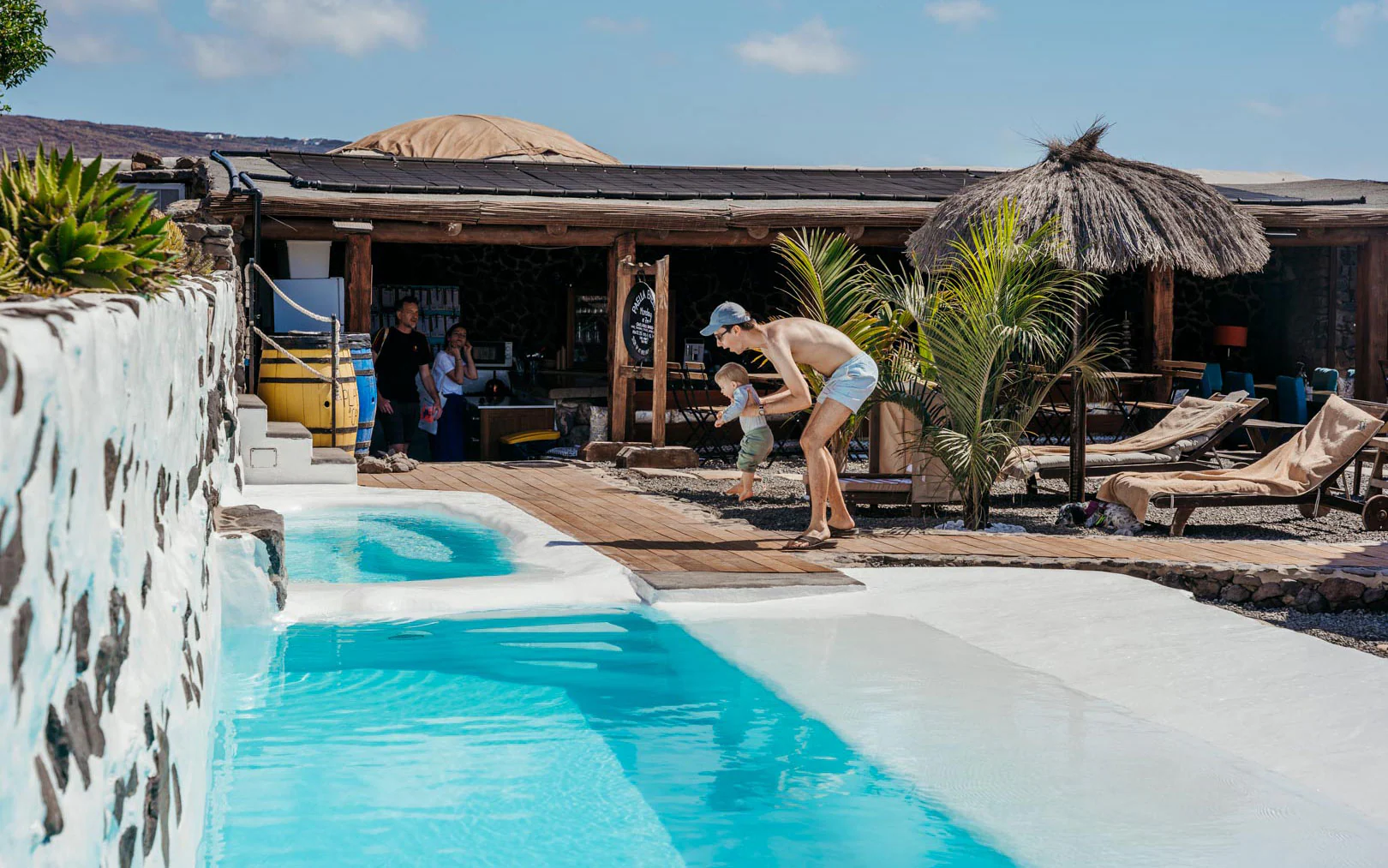
Off-grid rural hotels and finca stays appeal to families wanting authentic island life. Properties in the interior valleys and mountain villages of Lanzarote and Fuerteventura offer working farms, organic gardens, hiking access, and escape from tourist crowds. These typically cost 80 to 150 euros per night.
Three practical considerations shape family hotel selection here. First, water temperature matters more than latitude suggests. Winter months (November through March) deliver pleasant daytime weather but cool Atlantic waters that small children find uncomfortable. Second, wind patterns affect the western and eastern shores differently. Lanzarote's eastern coast and Gran Canaria's southern shores offer calmer conditions. Third, all-inclusive resorts eliminate daily dining decisions but reduce local exploration, while self-catering apartments balance independence with cost savings.
Flight times from mainland Europe run four to five hours. Budget carriers like Ryanair, Vueling, and easyJet offer frequent connections from most European cities at 40 to 80 euros per person if booked months ahead. Flying with children under two years old costs nothing on most European carriers.
The islands avoid major hurricane seasons and rarely experience extreme weather, making them reliable for family travel year-round. June through September brings peak heat and crowds; shoulder seasons (April, May, September, October) deliver milder temperatures with fewer tourists and better hotel rates.
Families planning multi-generational trips often split time across islands. Grandparents join parents in Tenerife's resorts while teenagers explore Lanzarote's kitesurfing beaches or Gran Canaria's hiking trails. Three to four days per island suits most family itineraries.
The Canary Islands work hardest for families with children aged five to fourteen. Teenagers often find the party-focused resort atmosphere dated, while toddlers tire easily in the heat. Budget 1500 to 2500 euros weekly for a family of four including flights, accommodation, meals, and activities during shoulder season.