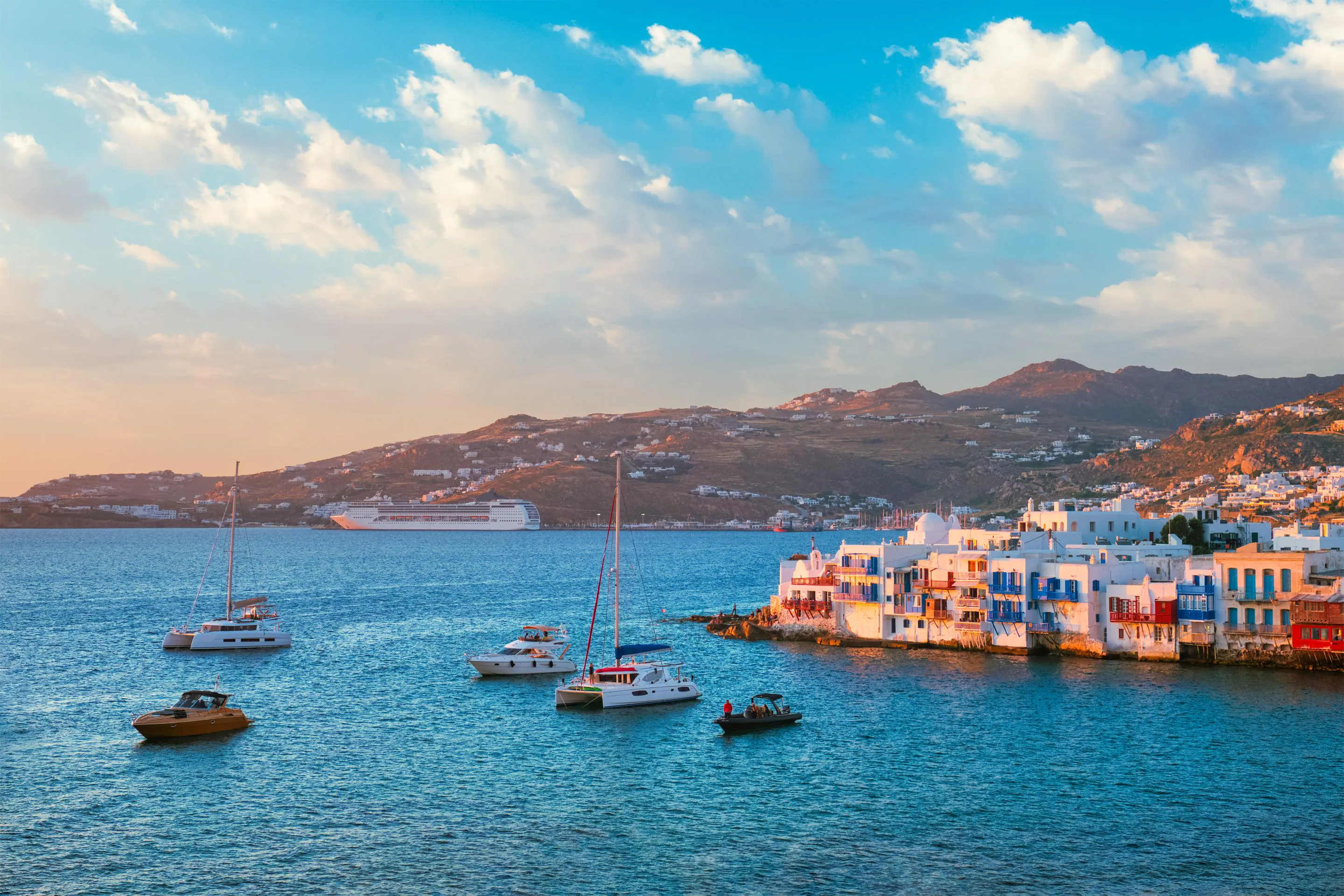
# Glamour Meets History: Your Guide to Mykonos Beyond the Nightclubs
Mykonos has evolved from a sleepy Cycladic fishing village into Europe's premier destination for high-net-worth travelers and celebrities seeking Mediterranean sophistication. But beyond the velvet-rope nightclubs and champagne-soaked beaches lies a destination with genuine depth, offering both hedonism and cultural substance.
The island's geography works in its favor. Located just 150 kilometers southeast of Athens, Mykonos delivers accessibility without sacrifice. Direct flights from London, Paris, and most major European hubs arrive at Mykonos "John Kapodistrias" Airport in under three hours. Once you land, private transfers take roughly 15 minutes to reach the main town, where whitewashed Cycladic architecture tumbles toward turquoise Aegean waters.
Accommodation sets the tone for your stay. Luxury properties cluster across the island, from ultra-exclusive villas perched on cliffsides to boutique hotels embedded in the labyrinthine streets of Mykonos Town. The five-star Cavo Tagoo offers dramatic sea views and direct beach access via private stairs. For uncompromising privacy, standalone villas through operators like Mykonos Luxury Villas command nightly rates between 1,500 and 5,000 euros, though rates peak during July and August.
Dining reflects the island's cosmopolitan appetite. Nammos, positioned on Paradise Beach, attracts A-list crowds with Mediterranean fine dining that blends Cycladic tradition with contemporary technique. Reservations require advance booking and connections. For more accessible excellence, Kiki's Taverna in Ano Mera serves authentic island cuisine without pretense, where fresh caught fish and horta (boiled greens) cost roughly 15 to 25 euros per dish.
The nightlife narrative overshadows Mykonos's archaeological treasures, a missed opportunity for culturally curious travelers. The iconic white stone windmills dominating the town's skyline date to the 16th century. Delos, a short ferry ride away, ranks among Greece's most important classical sites, home to temples dedicated to Apollo and Artemis dating to the 5th century BC. Few tourists venture here, making it a serene counterpoint to the island's beach scene.
Beach culture divides sharply. Paradise and Super Paradise cater to party seekers, with sunset sessions featuring international DJs and bottles starting at 300 euros. Kalafati Beach and Kalo Livadi offer quieter alternatives, attracting families and travelers seeking sun without spectacle. Day beach clubs operate seasonally from May through September, with entrance fees typically ranging from 20 to 50 euros, often credited toward food and beverage purchases.
Shopping clusters in Mykonos Town's winding streets, where boutiques from established luxury houses sit alongside independent Greek designers. Budget 50 to 100 euros for quality local products including olive oil, feta cheese, and textiles.
Transportation beyond the airport relies on rental cars, quad bikes, or organized tours. Taxis operate throughout the island, though pre-arranged private car services through your hotel ensure reliability during peak season.
Mykonos demands timing. Visit May through June or September through October to experience the island's charms without July-August crowds and premium pricing. Summer weeks attract over 30,000 daily visitors, pushing restaurant reservations to weeks-long waits and hotel rates to their annual peaks. Shoulder seasons deliver the same Mediterranean warmth and cultural access at 40 to 50 percent lower costs.