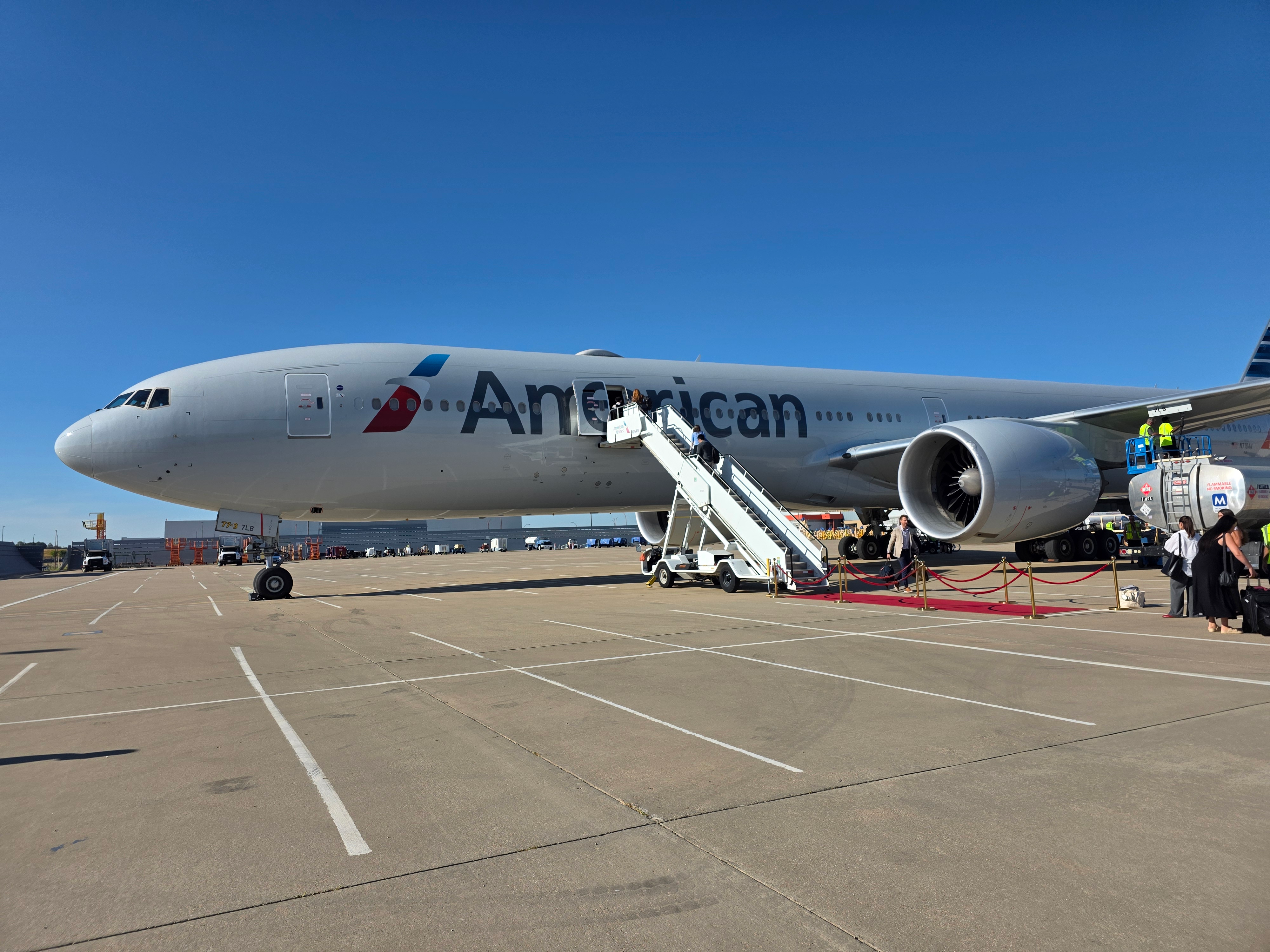
American Airlines wants the Department of Transportation to believe it can cancel award tickets whenever it pleases, consequences be damned. The airline's lawyers argue that their AAdvantage terms give them an unrestricted right to revoke benefits issued in error, and that this is "the beginning and the end of this case." But it's only the beginning if you stop reading—and the Department shouldn't.
The facts are straightforward: American Airlines discovered a pricing error two days after a customer booked three roundtrips (to Australia, Italy, and New York) at artificially low mileage rates. Rather than following its own contract of carriage, which explicitly states the airline will void mistaken fares and provide notice within 72 hours after discovering the error, American waited nearly three weeks to cancel. The airline admits that more than 72 hours had already passed when it canceled. Yet American's lawyers claim the airline's general right to correct errors trumps the specific 72-hour procedure it published for exactly this scenario.
This is where American's legal argument collapses under scrutiny. The airline wrote both the general error-correction clause and the specific 72-hour cancellation procedure. Its own AAdvantage terms state that when general program terms conflict with service-specific agreements, the specific agreement governs. American's contract of carriage and international tariff both contain that 72-hour deadline. American's lawyers quoted the general error-correction language and simply skipped over the terms explaining how these agreements fit together. They never even attempted to explain why the specific 72-hour language doesn't apply to these tickets.
Even more damning: American's response to this complaint uses identical language to its response in another passenger complaint filed six days earlier—including a reference to a customer who booked eleven awards for sixteen tickets. That customer wasn't this one. This isn't just weak legal reasoning; it's sloppy representation suggesting the airline's lawyers either didn't read their own arguments or treated passenger complaints as interchangeable nuisances.
The Department of Transportation has already established that airlines can cancel mistake fares, but only if they follow their published procedures. When Alitalia published passenger protections in its conditions of carriage while relying on conflicting tariff terms, the DOT found an unfair and deceptive practice and fined the airline. American is doing exactly that—relying on an unrestricted cancellation right under general program terms that conflict with its contract of carriage and tariff. Passengers who read American's own published rules should be able to rely on them, whether they knew they got a great deal or not.
The Department should investigate whether American's conduct constitutes an unfair and deceptive practice and enforce the 72-hour rule American itself established. Airlines benefit when their rules are ambiguous; passengers should benefit when rules are clear.