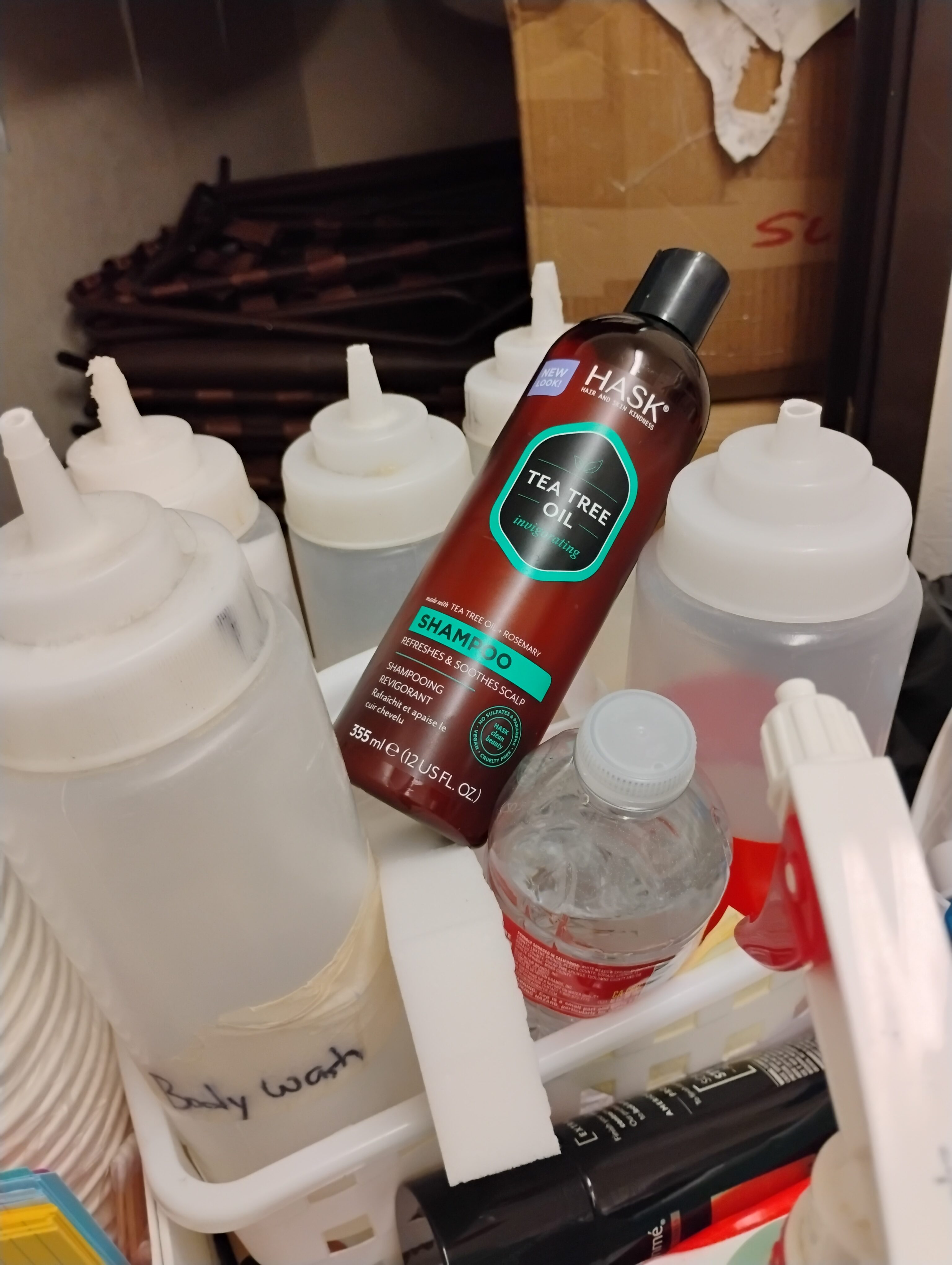
When a hotel advertises Jonathan Adler bath amenities across all six room categories, guests have every right to expect Jonathan Adler products in their bathrooms. Yet at Hotel Avante in Mountain View, California, a housekeeping cart recently photographed by a reader tells a different story: HASK Tea Tree Oil & Rosemary Invigorating Shampoo, the 12-ounce retail size sold at CVS, sitting among unbranded squeeze bottles with handwritten labels. This isn't a one-off incident or an isolated mistake. This is a pattern.
Just a few miles away sits Wild Palms, Hotel Avante's sister property under the same ownership group. In November 2025, I reported on reader photos showing Jonathan Adler bottles displayed in guest bathrooms while housekeeping carts carried large DRIFT bulk toiletries. By January, follow-up photos revealed the bulk jugs with labels removed—yet Wild Palms continues to advertise Jonathan Adler toiletries. Two properties. Same ownership. Same problem. Different months. This is not coincidence; it's systematic.
The economics are clear: HASK is an affordable retail brand. DRIFT bulk products cost pennies to dispense. By maintaining Jonathan Adler branded packaging while substituting cheaper bulk alternatives, these properties pocket the savings while their guests—and the brands they're advertising—bear the reputational damage. It's a shell game where guest expectations and brand integrity are the losers. The reader at Hotel Avante documents exactly this deception: handwritten labels on condiment-style squeeze bottles that tell guests what the product is without revealing whose product it actually is.
This pattern reveals a fundamental problem with bulk dispensers that was never adequately addressed when the hospitality industry embraced them. When hotels can refill branded packaging with different contents, they've created a system ripe for substitution. The guest sees 'Jonathan Adler' and assumes quality; the hotel delivers a CVS-brand alternative. No one changes what the guest sees, yet everything changes about what the guest receives.
Hyatt had a clear reason to strengthen monitoring after the Wild Palms incident. They didn't. That's the real failure here—not just the initial discrepancy, but the organizational inability or unwillingness to prevent it from happening again at a nearby property. If Hyatt cannot ensure that sister properties under the same ownership group deliver advertised amenities consistently, how can guests trust any Hyatt property's promises about included services?
Hotels must deliver the products they advertise, and bulk dispensers must be filled with what the labels claim. Anything less is a broken promise to guests and a breach of trust with the brands hotels claim to partner with. Hyatt needs stronger accountability mechanisms—not after the second incident, but immediately.