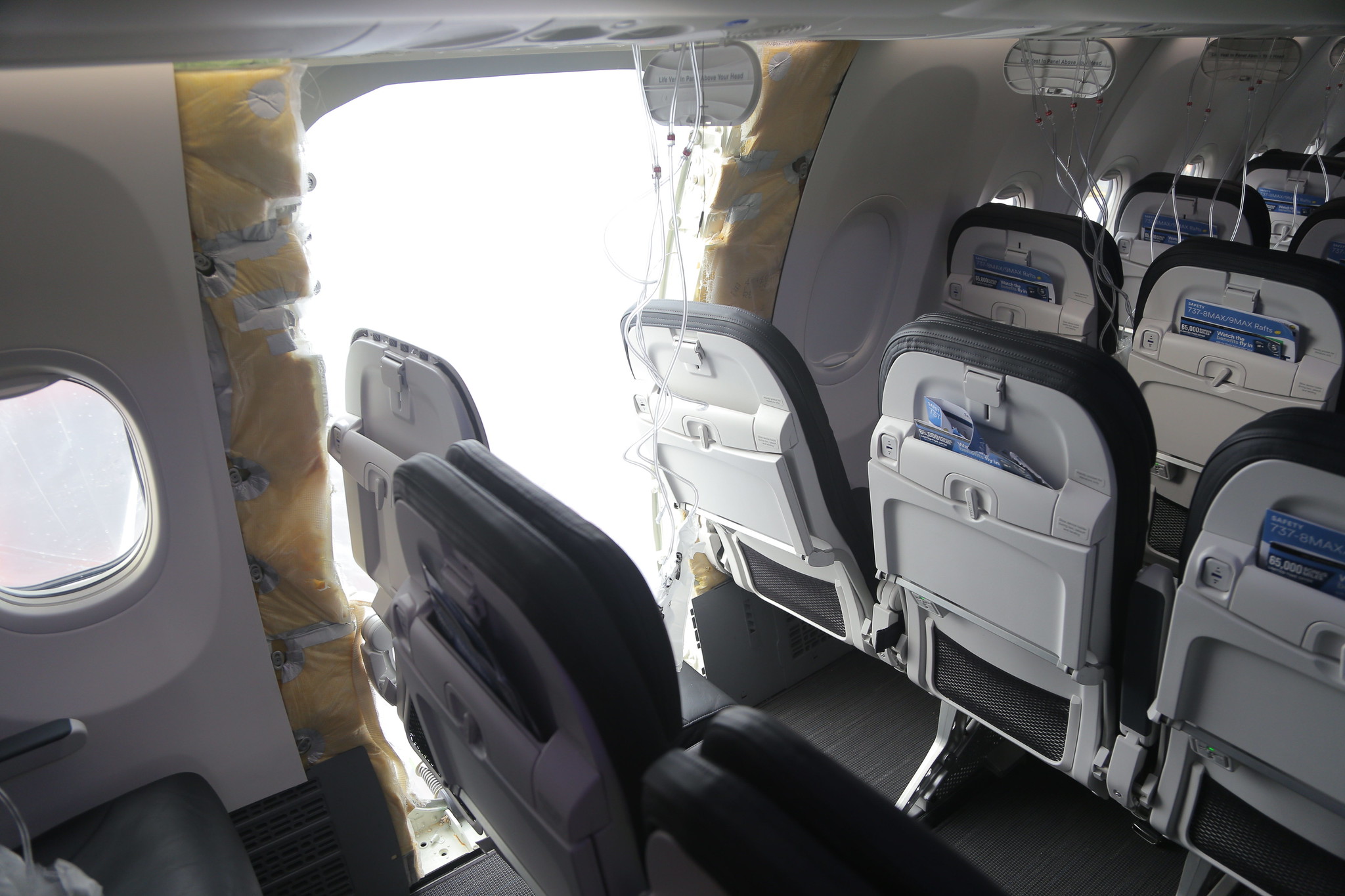
Boeing admits its 737 MAX 9 was "not reasonably safe in construction" when it left the factory after a door plug blew out on Alaska Airlines flight 1282 on January 5, 2024. The planemaker is fighting to block passengers from collecting punitive damages. The aircraft was climbing out of Portland toward Ontario, California at nearly 15,000 feet when the plug departed, causing rapid cabin depressurization. Oxygen masks dropped, belongings flew out, and pilots safely returned to Portland.
Spirit AeroSystems built the fuselage. At Boeing's Renton factory, workers opened the plug for rivet repairs, then closed it without reinstalling the four bolts that kept it secure. The National Transportation Safety Board identified Boeing's inadequate training, guidance and oversight as the probable cause.
Boeing has won one punitive damages case. A judge ruled that Washington law governed the lawsuit filed by Cynthia Tisher and her son, whose shirt was sucked off his body during the blowout. His seat pitched toward the opening. His mother held onto him to keep him from being pulled out. The judge threw out the punitive damages request and refused to reconsider.
A group of 47 plaintiffs now suing Boeing, Spirit AeroSystems and Alaska Airlines is arguing that decisions at Boeing's former Chicago headquarters contributed to the failures that sent the airplane out without its bolts. They claim Boeing management promised safety improvements to regulators and the public while failing to deliver them. This strategy aims to access Illinois law, which allows punitive damages.
Boeing's admission serves a legal purpose. The planemaker can argue that testimony about how badly it acted is unnecessary when deciding compensation amounts. Its strategy hinges on getting punitive damages dismissed.