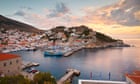
# Hydra: The Greek Island Where Leonard Cohen's Legacy Still Echoes
Hydra remains one of the Mediterranean's most intoxicating destinations, a place where literary history collides with bohemian romance on a rocky Aegean island. Travel writer Polly Samson, author of the novel "A Theatre for Dreamers" inspired by Leonard Cohen's legendary time on the island, captures the magnetic pull this car-free sanctuary exerts on those who visit.
The island's modern mythology centers on the 1960s, when Cohen and his artistic circle transformed Hydra into a creative haven. That era shaped the island's identity permanently. Today, travelers following in Cohen's footsteps discover an island frozen in a particular kind of aesthetic perfection, where whitewashed houses cascade down mountainsides to azure harbors and donkeys remain the primary transport.
What makes Hydra exceptional for 21st-century travelers: no cars. Ever. This restriction, enforced since the 1970s, preserves an atmosphere that vanished from most Mediterranean islands decades ago. Ferries arrive from Piraeus port near Athens, a journey taking roughly 90 minutes aboard Hellenic Seaways vessels or high-speed Flying Cats. The lack of vehicular traffic means the island maintains a pedestrian intimacy impossible elsewhere in Greece.
Accommodation ranges from budget pensions to restored stone mansions converted into boutique hotels. The island's infrastructure remains deliberately modest. Electricity arrived relatively late. Running water came later still. This rawness appeals to travelers seeking authenticity rather than resort amenities. Local restaurants along the harbor serve Greek staples at modest prices. A moussaka or souvlaki costs less than fifteen euros.
The superstition Samson mentions, throwing coins into Hydra's harbor for safe return, reveals something about the island's hold on visitors. People don't simply visit Hydra. They pledge themselves to it. The island's small size (roughly 2,000 residents) means exploration takes days, not weeks. Visitors climb narrow stone staircases, discover pocket-sized tavernas tucked into alleyways, and swim from rocky beaches accessible only by foot or boat.
Hydra's bohemian reputation persists more through atmosphere than actual bohemians. Leonard Cohen recorded music here. Magnetic Fields author John Fowles lived here. Norwegian painter Panayiotis Tetsis made it his artistic center. Contemporary Hydra still attracts writers, painters, and musicians, though today's visitors tend toward affluent professionals seeking escape rather than artistic pilgrims.
Traveling to Hydra requires planning. The island has no airport. Most visitors fly into Athens (Eleftherios Venizelos Airport), then travel by car or bus to Piraeus port. Peak season runs June through August, when ferries overflow and accommodation prices double. Shoulder seasons in May and September offer better value and fewer crowds while maintaining warm Mediterranean weather.
The island's recent challenges include water shortages during summer months and limited medical facilities. Travelers should arrive prepared for basic conditions. Yet these constraints actually protect Hydra's character. The inconvenience filters out casual day-trippers and resort tourists, preserving the island for those genuinely seeking solitude and artistic inspiration.
Samson's return to Hydra, coin in hand, mirrors countless travelers' pilgrimages to this island. Whether drawn by Leonard Cohen's ghost, the island's raw beauty, or simply the promise of stepping outside modernity, visitors find something irreplaceable here. Hydra doesn't offer activities or attractions. It offers a temporal escape, a place where life operates at a human scale and the past feels present.