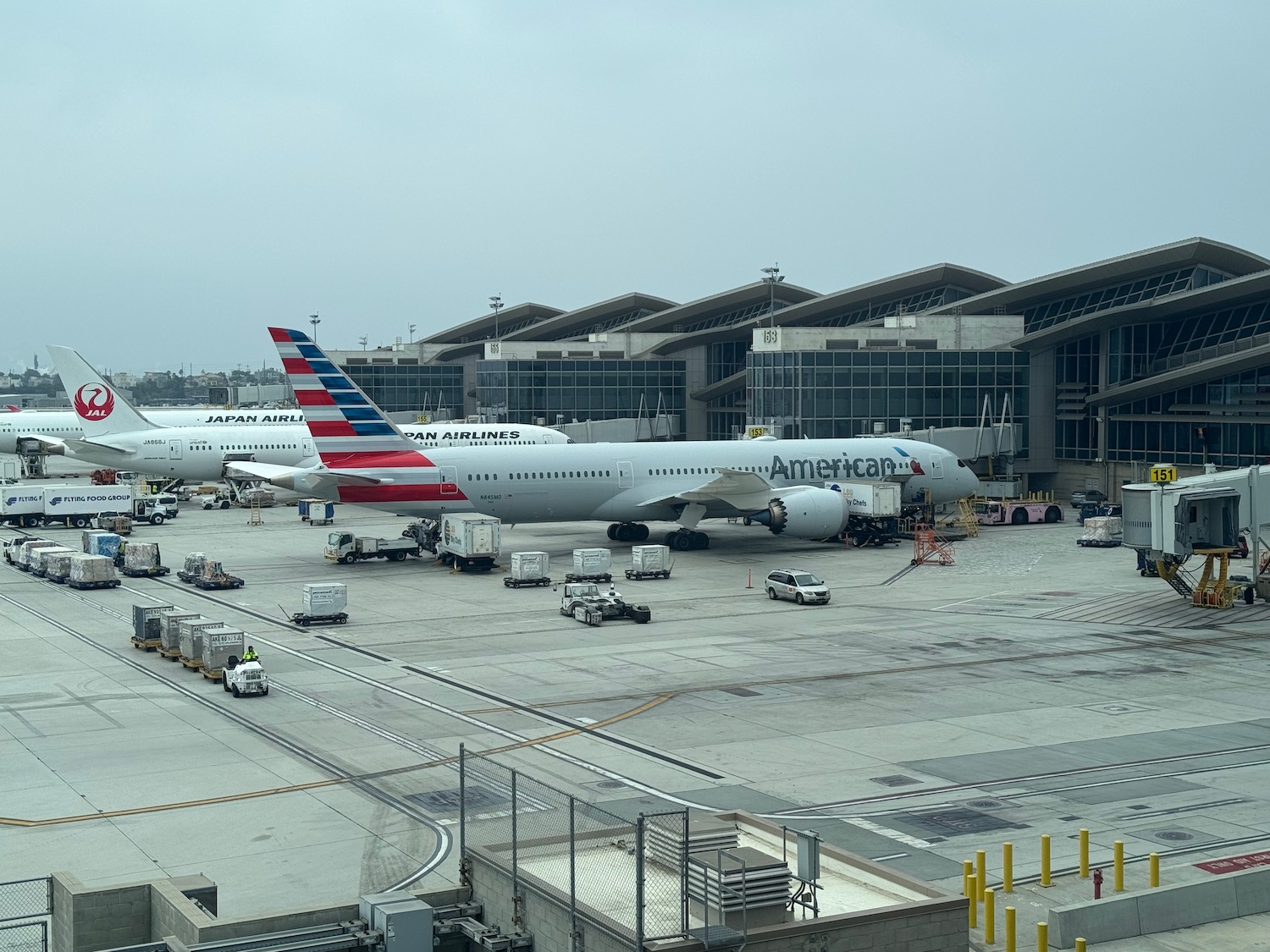
American Airlines is exploring nonstop service between Los Angeles and Singapore, a major strategic pivot that would resurrect the carrier's long-dormant transpacific presence from its West Coast hub.
The carrier shelved most transpacific routes from Los Angeles International Airport years ago, ceding Asian markets to competitors like United Airlines and Delta Air Lines. A new Los Angeles-Singapore nonstop would represent an 18-hour journey, pushing the boundaries of American's current ultralonghaul capabilities. The airline has not officially confirmed plans, but aviation analysts report the carrier is seriously evaluating the route's viability.
This move signals American's readiness to compete more aggressively in Asia-Pacific markets, where demand from leisure and business travelers continues to climb. Singapore serves as a major hub for connecting passengers across Southeast Asia, India, and Australia. American already operates extensive domestic service from LAX, positioning the airport as a natural launching point for Asian routes. The airline's fleet of Boeing 787 Dreamliners and Airbus A350s can handle the distance comfortably, though an 18-hour journey tests crew regulations and passenger comfort thresholds.
If American launches this route, pricing will prove critical. Singapore carriers like Singapore Airlines dominate the market with premium service standards. United and Delta offer competitive routing through their own hubs. American would need to undercut rivals on fares or differentiate through schedule convenience. An early-morning LAX departure, for example, could arrive in Singapore early evening the next day, making connections to Australia and New Zealand attractive.
Costs matter enormously. Operating an 18-hour nonstop burns massive fuel. The Boeing 787-9 carries 242 to 330 passengers depending on cabin configuration. American typically configures its 787s with 280 to 330 seats in a three-cabin layout. Revenue per available seat mile becomes razor-thin on ultralonghaul routes, particularly if American deploys premium economy. The airline needs consistent load factors above 85 percent to break even.
The timing reflects broader industry trends. Post-pandemic, American has aggressively expanded its international footprint, particularly in Latin America and the Caribbean. Asian expansion lagged competitors. The Los Angeles-Singapore route fills a strategic gap. LAX itself has become increasingly competitive, with new terminal facilities attracting carriers seeking premium facilities. American's flagship Flagship Lounge and premium boarding experiences could differentiate service.
Regulatory approval presents no obstacle. The U.S. and Singapore maintain open-skies agreements. American holds extensive bilateral rights from LAX. The real question centers on profitability and crew scheduling. A daily Los Angeles-Singapore flight requires multiple aircraft rotations and complex crew management. American would likely operate the service three to five times weekly initially, ramping capacity based on demand.
Singapore's tourism board has actively courted U.S. carriers, offering incentives for new service. The city-state's Changi Airport consistently ranks among the world's best, with efficient connections and premium amenities. American passengers connecting onward to Australia, Thailand, or Malaysia would benefit from Changi's reputation.
Route success hinges on corporate partnerships. Singapore hosts major regional headquarters for tech companies, financial services firms, and consulting groups. American needs corporate travel programs and premium cabin bookings to justify the investment. Leisure demand alone cannot sustain an 18-hour nonstop indefinitely.
American's potential Singapore return represents confidence in transpacific recovery and willingness to challenge entrenched competitors on their turf.