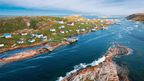
Battle Harbour, a remote island off Labrador's coast, operates as a seasonal historic retreat from June through early September. Once the heart of Atlantic Canada's saltfish industry in the 1770s, the car-free island now welcomes overnight guests to restored cottages and historic inn rooms where life-sized cardboard cutouts of 1900s fishermen and merchants greet visitors at the wharf.
The island housed around 300 year-round residents at its peak, with thousands of seasonal workers processing salt cod for export to Europe and the Caribbean. A 1930 fire, declining fish stocks, and a 1960s provincial resettlement program gradually emptied Battle Harbour. The final blow came on July 2, 1992, when a federal cod moratorium closed the fishery and threw 30,000 people across Newfoundland and Labrador out of work. The last year-round residents departed in the 1970s.
Getting there requires flying to Happy Valley-Goose Bay, driving five hours along Expedition 51° highway to Mary's Harbour, then taking a 60 to 75-minute passenger ferry that departs daily at 11:00 and returns at 09:00. The boat winds 14.5 kilometers past craggy coastline where gulls, kittiwakes, gannets, and occasionally icebergs and whales appear.
Two-night packages start at C$1,570 (£835; $1,106) for two people, including accommodation, return ferry transfers, meals and a guided historical tour, with taxes and gratuities extra. Day trips also operate during summer. The island has no mobile phone service and one communal Wi-Fi spot. An emergency walkie-talkie system operates in guest accommodations.
Guests stay in restored cottages and historic inn rooms like the Harry Smith Room in the Merchant Building, which overlook the sea. Communal dinners feature Labrador char, pan-fried cod and moose pot pie. A 1.9-kilometer footpath connects the old cemetery, where an Arctic fox family lives, to a memorial marking a 1976 seaplane crash.