A red cloth flying in the breeze signals that chicha, an ancestral Andean beverage, is ready to drink in Peru. The flag, or sometimes a plastic bag or balloon, tells passersby to stop by a chichería before the batch runs dry.
Chicha de jora, the most common form, ferments germinated yellow corn for several days to produce a mildly alcoholic drink around five percent alcohol. The grain is ground, cooked to produce what locals call upi, strained through straw-lined baskets, then boiled again with additional maize to start fermentation. The taste is slightly sour with a hint of fizz, somewhat like kombucha. For ceremonies, fermentation is shorter to reduce alcohol content.
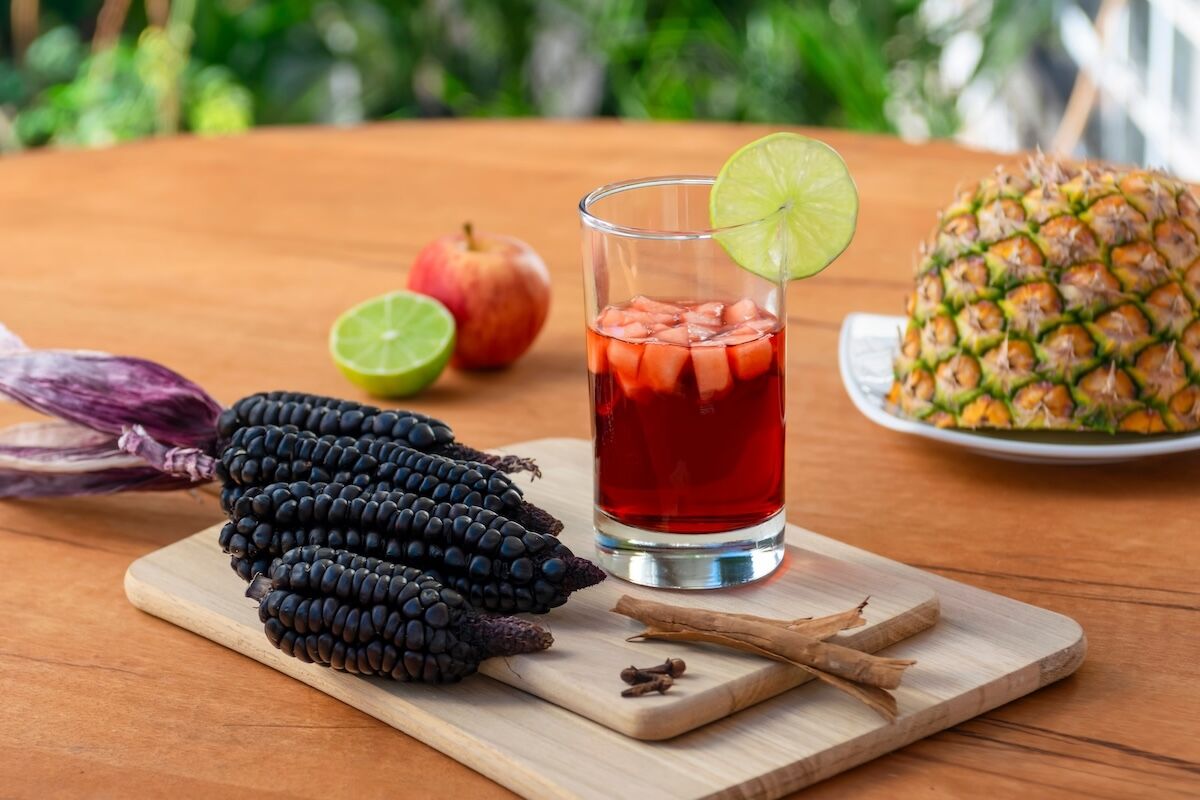
Chicha morada, alcohol-free and made from purple corn native to the Andes, is boiled with pineapple, cinnamon, cloves, and sugar. Communities also make versions infused with local ingredients, including frutillada (with strawberries) in Cusco and the Sacred Valley, and chicha de güiñapo (fermented with black corn from Arequipa).
Leo Silva, Indigenous Community Relations Manager at Mountain Lodges of Peru, explains that chicha holds deep ceremonial importance. "The first sip is given to the earth as an offering, and only then do we share the toast. It is a small but meaningful way of showing gratitude and respect for the Pachamama." Travelers attending shaman-led pago a la tierra ceremonies around Cusco and the Sacred Valley may experience this tradition firsthand.
Chicherías, informal establishments often inside private residences, serve chicha in dining spaces where visitors can drink and socialize. Picantería Mamatrini in Cusco's San Blas neighborhood and La Chuccha in Santa Ana offer handcrafted chicha alongside regional specialties like cuy, fried trout, and quinoa soup. Chicha por Gaston Acurio near Plaza de Armas reinterprets traditional Andean dishes with chicha-based cocktails and housemade chicha morada and frutillada. Salineras Ranch operates chicha de jora workshops in the Sacred Valley.
On Peru's coast, chicha morada appears in cocktails. Bijou Bar in Miraflores creates the Moradita by fusing pisco with chicha morada and garnishing with blueberries and tonic. Limaq Bar, led by Joel Chirinos, features rotating guest bartenders who create drinks like El Combinao, a mix of purple maize, pisco, and horchata. Mercado de Pueblo Libre in Lima's oldest neighborhoods sells homemade chicha de jora and chicha morada to go.