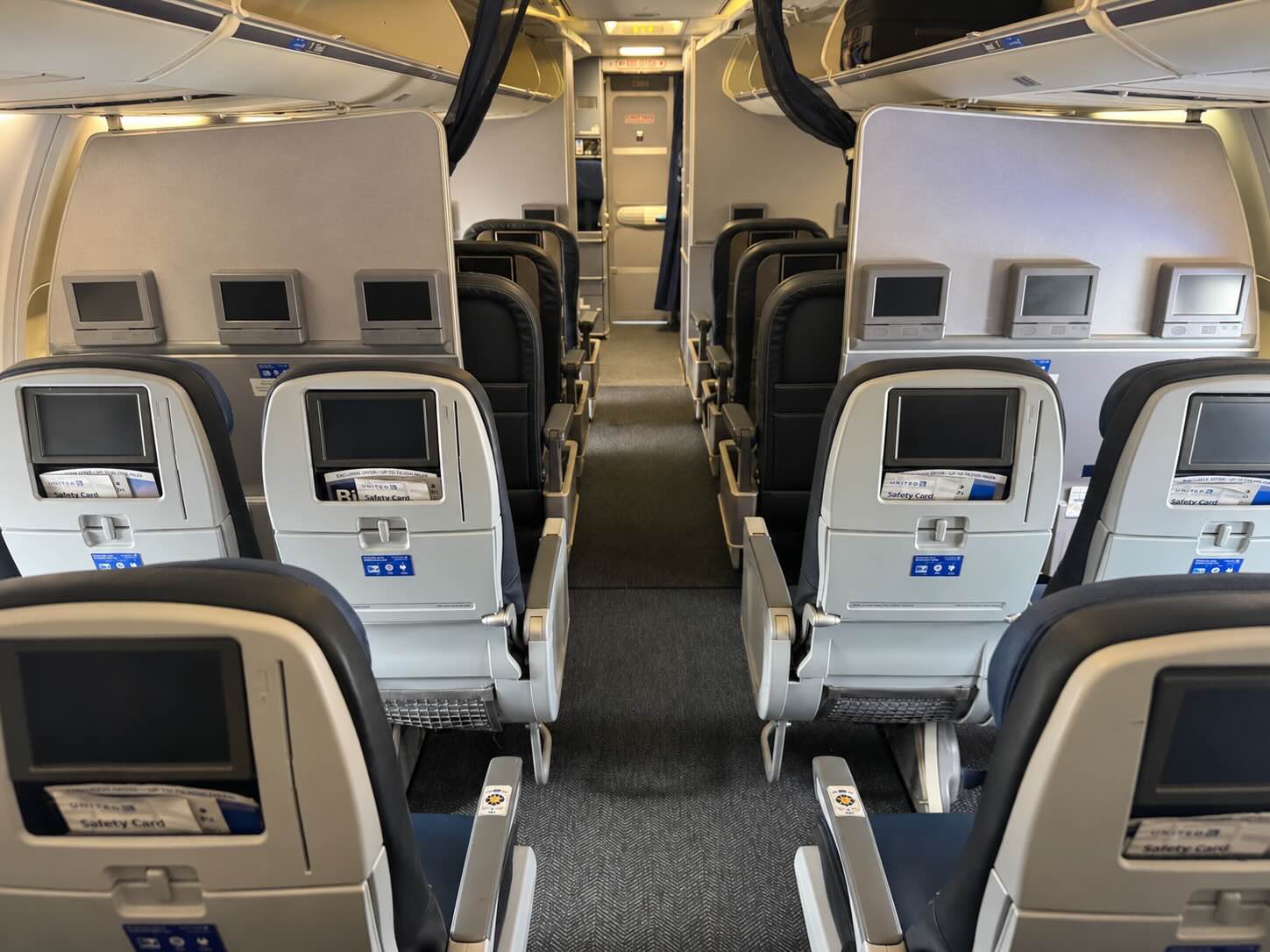
United Airlines is accelerating its Starlink deployment so aggressively that it's creating an awkward gap in passenger experience. According to an internal memo reviewed by Live And Let's Fly, a small number of Boeing 737-900 aircraft in the 73C configuration have received Starlink before their United Next interior refresh, which has deactivated the existing DirecTV system and left seatback screens inoperative. As of November 5, United's official Starlink tracker lists 677 equipped aircraft with Starlink available on 50% of its daily flights, and Chief Information Officer Deneen DeFiore announced at the CyberSat conference this week that the deployment timeline has been reduced from two to three years to just 18 months. This aggressive timeline is admirable in principle—faster, free Wi-Fi is undeniably better than aging DirecTV—but the execution is creating real problems for real passengers.
United has placed placards on the dark screens explaining the upgrade and directing MileagePlus members to free Starlink Wi-Fi, and the affected aircraft display Starlink signage by the boarding door. The airline even notes that flight attendants must perform live safety demonstrations instead of playing the safety video on these five aircraft, as of November 3. But a placard and signage don't solve the fundamental issue: families with children boarding one of these planes will find themselves without in-seat entertainment through no fault of their own.
Yes, passengers can stream content on their personal devices, and yes, Starlink is genuinely superior to DirecTV for productivity and connectivity. For business travelers, this transition is a clear win. But the calculus shifts dramatically when you're traveling with children who don't have phones. Seatback screens aren't a luxury—they're a practical tool that keeps young passengers occupied during flights and allows parents to manage their own devices simultaneously. Telling a family to 'just use your phones' ignores the reality that not every passenger has multiple charged devices or that screen-sharing with children isn't always feasible.
United should have either waited to install Starlink until after the United Next cabin refresh was complete, or ensured that temporary alternatives—perhaps portable tablets or extended device access—were available on affected flights. The growing pains excuse only works if the airline acknowledges the inconvenience and mitigates it proactively rather than relegating the solution to a placard and a hope that passengers bring fully charged devices.
The long-term outcome is positive. Starlink will eventually replace DirecTV across the fleet, and faster connectivity benefits everyone. But United's decision to prioritize speed over passenger experience during this transition period is shortsighted. If you're flying one of these aircraft, United expects you to bring a charged device and headphones. The airline should expect to do better.