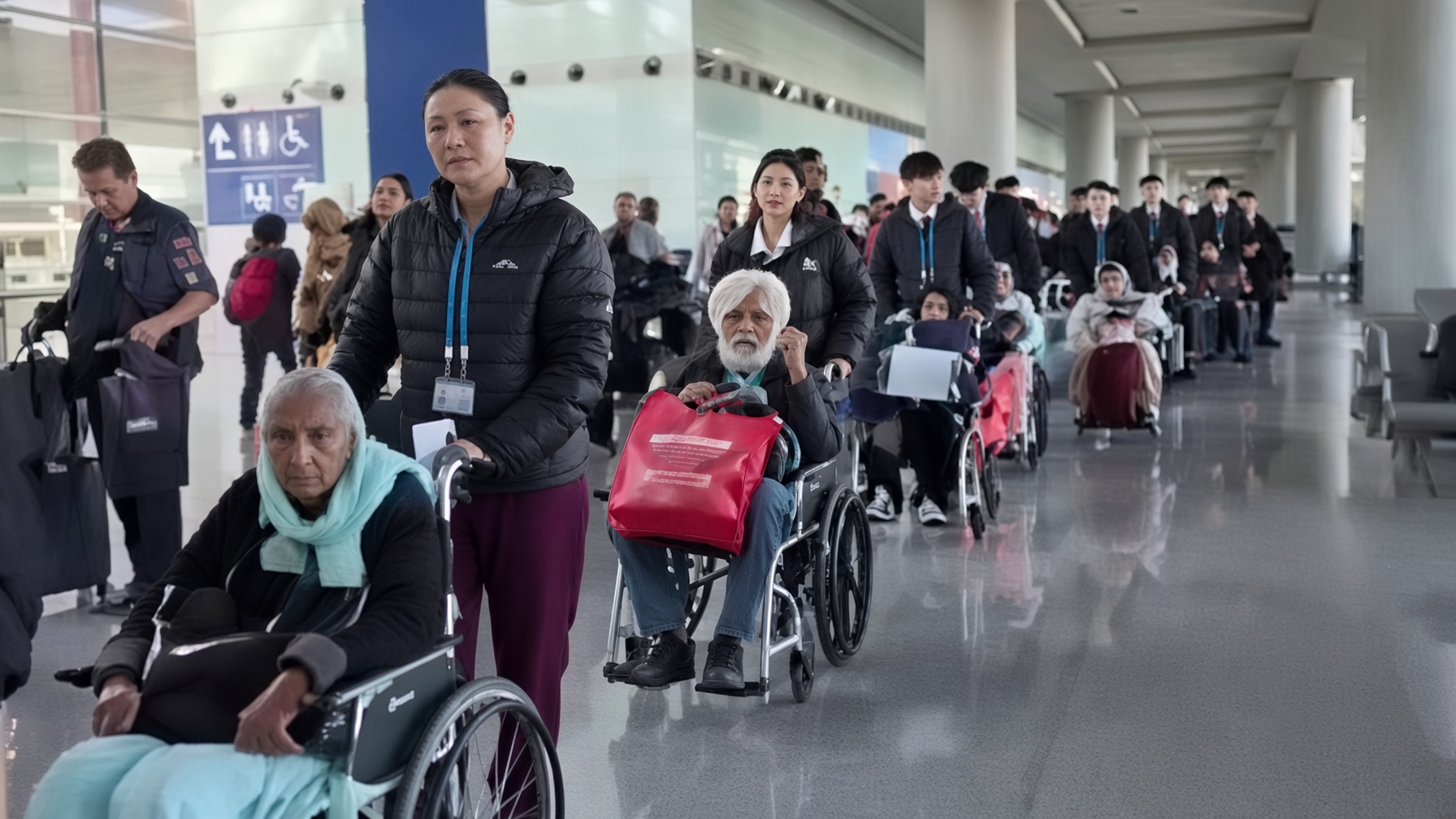
The viral videos from Beijing's Capital airport tell a damning story: around 20 passengers lined up in wheelchairs for flights to Toronto and Vancouver on November 9–10, only to walk freely through the terminal, collect their bags, and browse duty free upon arrival. This isn't a new phenomenon. Southwest Airlines saw 30 people use wheelchair assistance to preboard a flight, with 28 walking off on arrival. Frontier estimates each wheelchair request costs $30–$35. The math is simple: passengers are gaming the system for premium perks, and the airlines are letting them.
The incentives are obvious. Depending on the airport, wheelchair users get shorter check-in and security queues, personal guidance through terminals, early overhead bin access, and often better seating. Southwest's switch to assigned seating on January 27 was supposed to end the practice—passengers no longer get first choice of seats—yet Chief Operating Officer Andrew Watterson acknowledged wheelchair requests fell after the change, implying demand was driven by preference rather than need. Even worse, Southwest is now calling customers to offer moves into blocked premium seats farther forward, essentially gifting the very benefit the new system was meant to eliminate.
The scale of abuse is staggering. Reports suggest nearly 30% of passengers on some Air India long haul routes request wheelchair assistance. In May, more than 60 wheelchairs were reportedly prepared for a single Taipei departure to the United States. These numbers don't reflect actual disability rates in the population—they reflect a broken honor system that passengers have learned to exploit.
Yes, there are legitimate reasons someone might request assistance without having a visible disability: older relatives needing help finding gates, language barriers, or long walking distances. Beijing's airport escort service offers an alternative. But the moment airlines stop verifying need, they create a tragedy-of-the-commons problem.
The real victims aren't the airlines—they're passengers with genuine disabilities. When attendants are busy pushing people who don't need help, someone actually requiring assistance gets left waiting at the gate longer after the flight deplanes. This isn't a victimless perk; it's taking resources from those who depend on them.
Airlines must implement verification systems and enforce consequences for fraud. The easy option—allowing self-reporting with no accountability—is enabling widespread abuse at the expense of the people these services were designed to help. That's not hospitality. That's negligence.