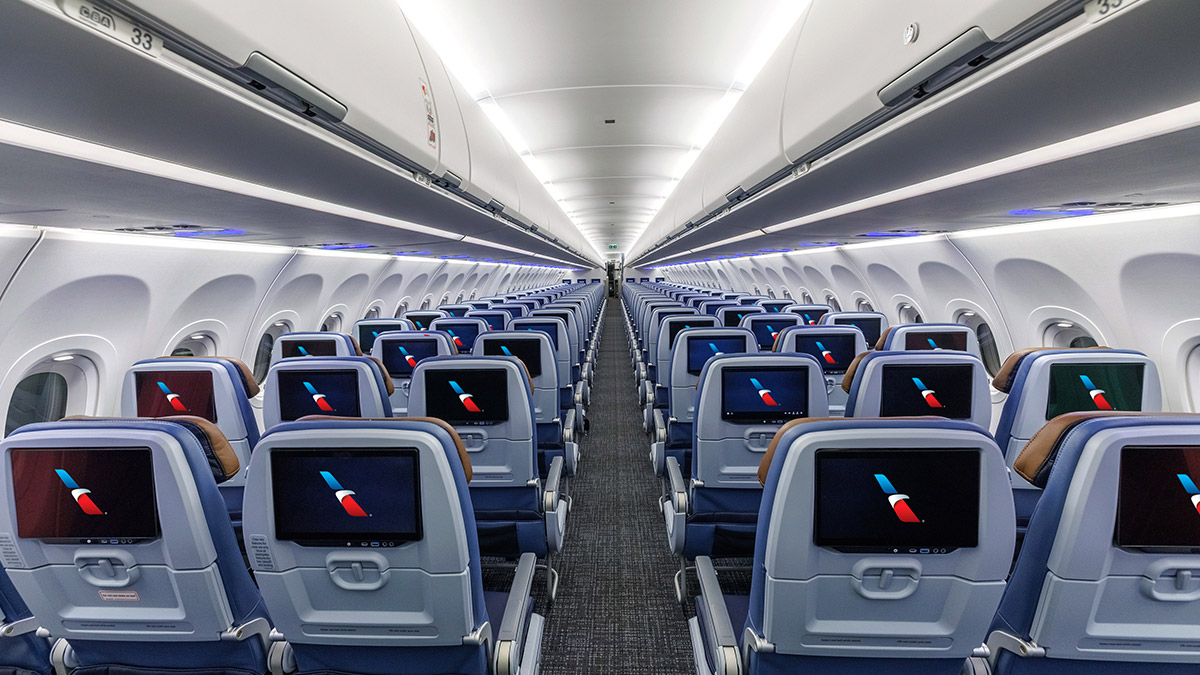
American Airlines is reversing one of its most controversial cost-cutting decisions. The carrier will reinstall seatback screens across its entire narrowbody mainline fleet, ending years of intentional removal that frustrated millions of passengers.
American Airlines had aggressively stripped these screens from Boeing 737s and Airbus A320s to save money and reduce weight. The strategy backfired as competitors invested differently. Delta Air Lines maintained and expanded its seatback entertainment systems, while United Airlines also reversed course and brought screens back after passenger backlash.
The move signals a competitive reckoning in economy cabin amenities. Seatback screens have become a baseline expectation for transatlantic and cross-country flights. Passengers increasingly view them as essential rather than luxurious, especially given rising ticket prices and baggage fees that have compressed overall value.
American's narrowbody fleet serves roughly 85 percent of its domestic passenger volume. Adding seatback screens to these aircraft represents a substantial capital investment and operational undertaking. The carrier will need to retrofit thousands of seats across hundreds of planes, a process that typically unfolds over multiple years.
The timing matters. American faces stiff competition from Delta, which boasted premium seatback systems across its fleet, and from ultralow-cost carriers like Southwest Airlines, which offers free checked bags and no basic economy restrictions. United's earlier screen reinstatement gave that carrier a competitive advantage in the economy segment.
Installation timelines remain unconfirmed, but major airline retrofits typically take 18 to 36 months for complete fleets. American will likely prioritize high-frequency routes and newer aircraft first, meaning transcontinental passengers will see screens before regional route flyers.
This decision reflects a broader industry pattern. Airlines periodically cut amenities to boost short-term profits, then restore them when passengers vote with their wallets and booking choices. S