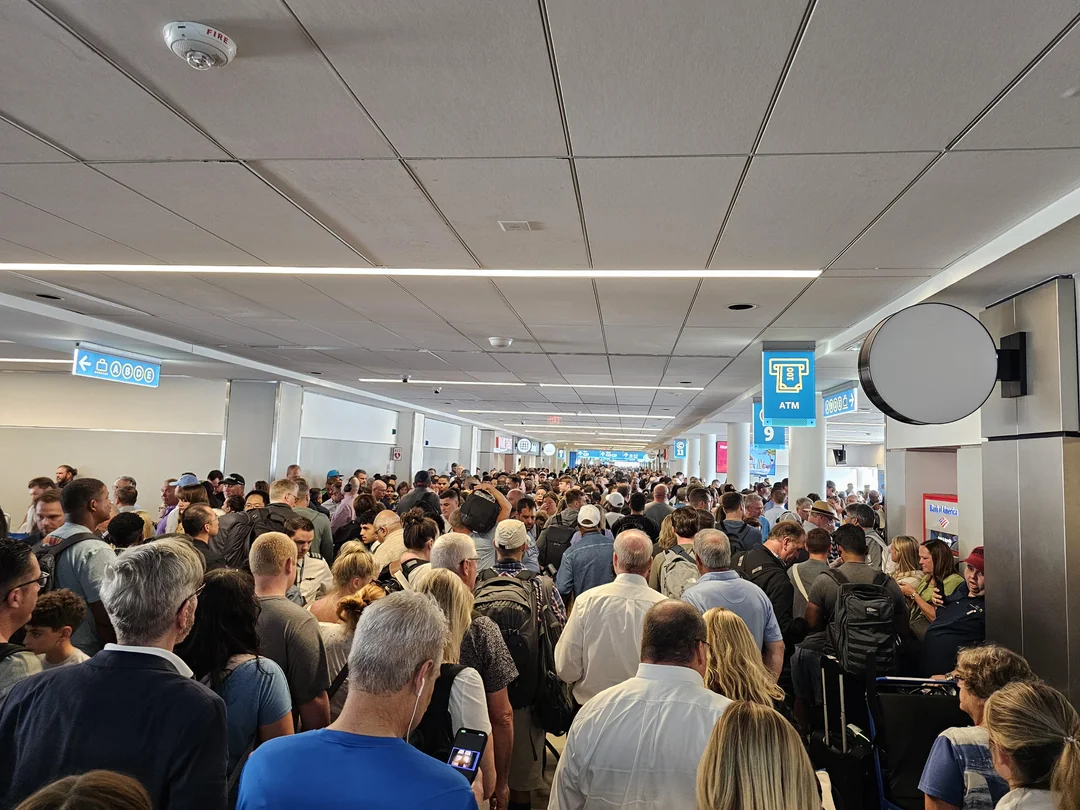
Charlotte Douglas International Airport enters a pivotal expansion phase that promises relief and challenges in equal measure. The $1.1 billion investment targets infrastructure that will fundamentally reshape passenger operations at one of America's busiest hubs.
The centerpiece of this overhaul involves constructing a sprawling 380,000-square-foot Concourse C extension housing 16 new American Airlines gates. American Airlines operates Charlotte as a critical hub, connecting passengers across the Southeast and beyond. The additional gates directly address chronic bottlenecks that plague the airport during peak travel periods.
Yet the expansion reveals a troubling trade-off. New gates come with a spatial penalty. The extended concourse will force passengers to navigate walks exceeding one mile between gates during connections. Charlotte already ranks among the hardest airports for tight connections. A passenger changing planes between distant gates faces arduous walks that test patience and logistics.
The broader infrastructure investment extends beyond gates. Charlotte is simultaneously pouring resources into new airfield pavement that promises to enhance operational efficiency. Better pavement means faster aircraft turnarounds and more reliable scheduling. This matters enormously for a hub that processes 130,000+ passengers daily and serves as American Airlines' second-largest operation after Dallas-Fort Worth.
The timing reflects industry trends. Hub airports nationwide grapple with capacity constraints as regional airlines feed passengers into major connecting cities. Charlotte's growth has outpaced terminal infrastructure for years. Airlines like American demand space for their expanding networks. This expansion signals Charlotte's bet on remaining competitive against rival hubs in Atlanta, Washington, and Nashville.
Travel planners booking connections through Charlotte should brace for physical demands. The construction timeline spans years, meaning that discomfort hits before benefits arrive. During construction phases, congestion may actually worsen as work progresses. Passengers with mobility concerns or tight connections below 90 minutes face real risk.
The cost calculation matters too. Airport expansion gets funded through passenger facility charges, rental car fees, and concession revenue. Those costs filter into ticket prices and car rental rates for everyone traveling through Charlotte. Passengers subsidize the growth whether they benefit directly or not.
American Airlines benefits most directly. The 16 gates strengthen its competitive position in the Carolinas and beyond. More gates mean more flights, more destinations, and more captured market share. Competing carriers using Charlotte get left behind in the infrastructure pecking order.
Charlotte Douglas serves destinations from the Caribbean to the Northeast, with strong service to Florida, New York, and California. The new gates enable American to deepen these routes and launch fresh service. That translates to more travel options for regional passengers but concentrated power for American.
For travelers planning trips through Charlotte, the expansion suggests patience now, opportunity later. Current passengers face continued crowding and delays. Booking direct flights whenever possible makes sense until construction wraps. Those with flexibility should consider routing through alternative hubs.
The airport completes one of aviation's continuing patterns. Growth creates infrastructure that becomes inadequate almost immediately. Charlotte's $1.1 billion bet addresses today's bottlenecks while likely creating tomorrow's.